IoT Network/ Connectivity Engineer Course
The IoT Network / Connectivity Engineer Course is designed to build expertise in the communication infrastructure that enables IoT systems. It covers wired and wireless networking technologies, IoT communication protocols, device connectivity, network configuration, and performance optimization. Through practical labs and real-world scenarios, learners gain hands-on experience in designing, deploying, and managing reliable and secure IoT networks. This course prepares participants for specialized roles in ensuring seamless, scalable, and efficient connectivity for large-scale IoT deployments.
- 182 Hours (2 hours/day x 6 days/week x 6 weeks) OR at your own pace
- Hindi, English
- Learn & Get Certified
- Basic & Intermediate
- Hands-On Training


Online Course Fees
Offline Course Fees
About this course
The IoT Network / Connectivity Engineer Course is a 30-hour advanced program designed as the next stage after the 152-hour IoT Engineer Master Course, extending the total training duration to 182 hours and preparing learners to manage, optimize, and deploy professional-grade IoT communication networks. This specialization builds advanced skills in Wi-Fi optimization, BLE scanning and beaconing, ZigBee, LoRaWAN, and NB-IoT concepts, along with real-world configuration of routers, access points, QoS policies, and industrial communication buses such as RS485 and CAN. Learners also gain hands-on experience with IoT SIM technologies (4G/5G, LTE-M, NB-IoT), mesh networking, and multi-protocol connectivity planning. The course culminates in a practical project where students deploy a ZigBee or LoRaWAN network and build a network monitoring dashboard—making them industry-ready to design and maintain robust, scalable IoT network infrastructures in smart cities, industrial IoT, and large-scale sensor deployments.
This course provides essential knowledge and practical training to build industry-relevant skills.
- Online Course Fees: ₹3500, ₹2500 (incl. GST) (Excluding tools & equipment cost)
- Offline Course Fees: ₹18000, ₹16000 (incl. GST) (Excluding tools & equipment cost)
- Certification: TCoE
- Duration: 182 Hours (2 hours/day x 6 days/week x 6 weeks) OR at your own pace
What you'll learn
After this course you will learn:
- IoT Networking Fundamentals – Understand IoT communication models, network layers, device-to-device and device-to-cloud connectivity.
- Wireless Communication Protocols – Learn Wi-Fi, Bluetooth, BLE, Zigbee, Z-Wave, LoRa/LoRaWAN, NB-IoT, LTE-M, and satellite IoT technologies.
- Networking Hardware & Gateways – Work with routers, gateways, network modules, antennas, repeaters, and RF components used in IoT systems.
- LPWAN Technologies – Master low-power wide-area networks, coverage planning, power optimization, and network design principles.
- Routing & Network Topologies – Understand mesh, star, hybrid networks, routing protocols, and multi-hop communication for IoT devices.
- IoT Communication Protocols – Implement MQTT, CoAP, HTTP/HTTPS, WebSockets, and lightweight protocol optimization.
- SIM Technologies & Cellular IoT – Learn eSIM/iSIM, cellular IoT provisioning, APN configuration, and device-level network registration.
- Cloud Integration for Networks – Configure IoT connectivity with AWS IoT Core, Azure IoT Hub, Google Cloud IoT, and specialized network servers.
Course Content
Why take this course?
This course equips you with the skills to design, deploy, and manage the communication backbone of IoT systems. You will learn about wired and wireless connectivity technologies, networking protocols, device provisioning, and performance optimization for reliable data transmission. As IoT solutions rely heavily on seamless, secure, and scalable connectivity across industries like smart cities, industrial automation, healthcare, and transportation, this course prepares you for specialized, high-demand roles. It enables you to ensure robust network performance, low latency, and secure communication essential for large-scale IoT deployments.
How to use online TCoE platform?
Tools and Equipment required
National Skill Development Mission
Module 1: Introduction to IoT and Automotive Systems (6 Hours)
- Covers the basics of IoT and its role in transforming the automotive industry.
- Learners explore connected vehicle ecosystems, IoT architecture in vehicles, and use-cases like telematics, smart parking, and fleet management.
Module 2: Automotive Sensors, Actuators & Microcontrollers (8 Hours)
- Introduces automotive-grade sensors (temperature, pressure, proximity, speed, oxygen, fuel level) and actuators.
- Learners interface these with ESP32 or Arduino-based controllers to acquire vehicle parameters such as speed, engine temperature, and distance.
Module 3: In-Vehicle Communication Protocols (8 Hours)
- Students learn about CAN, LIN, and OBD-II communication standards used for intra-vehicle data exchange.
- They decode sensor data via serial and CAN bus, exploring diagnostic tools and ECUs for automotive networks.
Module 4: Vehicle Data Acquisition using IoT Devices (8 Hours)
- Hands-on implementation of IoT data logging using ESP32, GSM, and GPS modules.
- Learners design real-time data capture and transmission to cloud servers for monitoring engine performance, fuel usage, and route activity.
Module 5: Telematics and GPS-based Vehicle Tracking (10 Hours)
- Design and implement telematics systems integrating GPS + GSM for vehicle tracking and telemetry.
- Learners build dashboards to display live vehicle position, route history, and alerts for over-speeding or geo-fence violations.
Module 6: Cloud Integration and Dashboard Development (10 Hours)
- Covers IoT cloud platforms like Firebase, ThingsBoard, Blynk, or AWS IoT Core.
- Students upload real-time sensor and GPS data to the cloud and create dashboards for vehicle analytics, trip reports, and remote monitoring.
Module 7: Predictive Maintenance & Vehicle Health Monitoring (8 Hours)
- Focuses on analyzing data to predict faults or maintenance needs.
- Learners use Python/Excel to interpret temperature, vibration, and performance trends.
- They develop simple rule-based or ML-based predictive models for vehicle health.
Module 8: Smart Mobility, EV Integration, and V2X Communication (8 Hours)
- Explores future trends — Vehicle-to-Vehicle (V2V), Vehicle-to-Infrastructure (V2I), and smart traffic management.
- Introduces EV monitoring (battery SoC, temperature) and integration of IoT with electric vehicle BMS and chargers.
Module 9: Case Studies & Capstone Project (6 Hours)
Learners apply knowledge to real-world projects such as:
- GPS + IoT-based Smart Vehicle Tracker
- Cloud-Connected Vehicle Health Dashboard
- IoT-Based EV Battery Monitoring System
Module 10: Assessment & Certification
- Includes final project presentation, viva, and online test. Certified participants demonstrate hands-on skills in IoT applications for modern automotive systems.
ENROLL TODAY & GET 30% OFF ON ALL COURSES
Your Future Can’t Wait, Enroll Now and Save 30% On All Courses.
Related Courses

IoT Cybersecurity Specialist

Fundamentals of AIoT

IoT Data/ Analytic Engineer
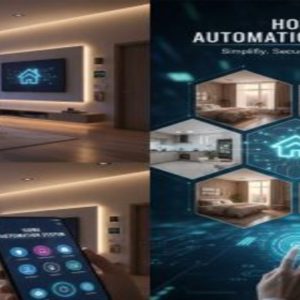
IoT Project: Home Automation
See what our students have to say
With over a decade of experience, our mission is to produce future-ready skilled resources.




IoT-Based Temperature Monitoring System
Learn how smart temperature sensors communicate real-time data through the Internet of Things (IoT) to enable intelligent monitoring and control. From designing sensor networks to visualizing temperature data on cloud dashboards, this topic shows how technology transforms ordinary sensors into smart, data-driven systems used in homes, industries, and healthcare applications.
Job Opportunities
Here are some interesting job opportunities after completing the IoT in Automobiles course:
Sensor Design Engineer – Develop and optimize temperature sensors for accuracy, reliability, and performance.
IoT System Developer – Integrate smart sensors into IoT networks for real-time data collection and analysis.
Embedded Systems Engineer – Program microcontrollers and hardware interfaces to control smart temperature devices.
Data Analyst (IoT Applications) – Interpret and visualize sensor data for intelligent decision-making in smart systems.
Automation & Control Engineer – Implement temperature-based control systems in industrial and environmental settings.
Smart Home Solutions Developer – Design innovative smart home devices using temperature sensors for energy efficiency and comfort.
Research & Development Associate – Work on next-generation sensor technologies and their applications in climate, healthcare, and manufacturing.
Frequently asked questions
Who can join this course?
Anyone interested in electronics, IoT, or smart technologies — students, hobbyists, and beginners are all welcome!
What will I learn in this course?
You’ll learn how temperature sensors work, how to interface them with microcontrollers, and how to build smart applications that monitor and control temperature.
Do I need programming skills to start this course?
No, the course starts from the basics. You’ll gradually learn simple coding and circuit concepts along the way.
Will there be any practical projects?
Yes! You’ll create a smart temperature monitoring system as a hands-on project to apply what you’ve learned.
How long does the course take to complete?
The course is designed to be completed in a few weeks, depending on your pace and practice time.
What can I do after finishing this course?
You can apply your skills in IoT projects, work with embedded systems, or pursue roles related to smart devices and automation.