Spectroscopy
What is Raman Spectroscopy?
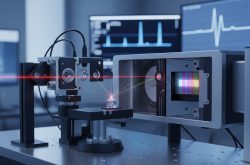
Raman spectroscopy is a powerful, non-destructive analytical technique that reveals the molecular “fingerprints” of materials using light. By measuring how molecules scatter laser light, this method provides rich information about a substance’s chemical composition, structure, and vibrational behavior. It is widely valued for its ability to analyze samples in their natural state—without requiring preparation—making it one of the most versatile tools in modern science.
What makes Raman spectroscopy truly fascinating is its vast range of applications. From identifying unknown materials and detecting impurities to studying biological tissues, pharmaceuticals, gemstones, and advanced nanomaterials, Raman opens a window into the microscopic world with remarkable precision. Its speed, accuracy, and real-time analysis capabilities have made it indispensable in research labs, industries, and forensic investigations—unlocking insights that drive innovation across science and technology.
Why learn Spectroscopy?
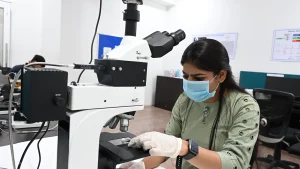
Learning spectroscopy gives you the ability to understand materials at their most fundamental level—by studying how they interact with light. This powerful analytical technique is essential across modern science and industry, enabling you to identify substances, analyze chemical structures, monitor reactions, and ensure product quality with precision and speed. From pharmaceuticals and chemicals to environmental monitoring, forensics, nanotechnology, and advanced materials, spectroscopy is a core tool driving innovation and decision-making. By mastering its principles and applications, you develop a highly valuable technical skill that strengthens your scientific capability, broadens your career opportunities, and empowers you to contribute to cutting-edge research and industry advancements.
Type of Industries where Renewable Energy is required
Pharmaceutical & Biotechnology Industry: Drug formulation and development, Identifying polymorphs in medicines, Quality control of APIs and excipients, Real-time process monitoring (PAT)
Chemical & Petrochemical Industry: Molecular structure analysis, Monitoring chemical reactions, Identifying contaminants in fuels and polymers, Studying catalysts and intermediates
Materials Science & Nanotechnology: Characterizing graphene, CNTs, nanomaterials, Stress/strain analysis in crystals and semiconductors, Studying thin films and coatings.
Semiconductor & Electronics Industry: Wafer characterization, Identifying defects, stresses, and impurities, Analysis of semiconductor materials like Si, GaN, MoS₂.
Environmental Monitoring & Pollution Control: Detection of pollutants in air, water, and soil, Identifying microplastics and hazardous chemicals, Wastewater treatment monitoring.
Food & Agriculture Industry: Detecting adulteration in food products, Quality assurance of grains, oils, dairy, and beverages, Monitoring pesticide residues and contaminants.
Forensics & Law Enforcement: Identifying unknown substances at crime scenes, Narcotics analysis, Explosive residue detection, Document and ink analysis.
Healthcare & Biomedical Research: Disease diagnosis (cancer, diabetes biomarkers), Studying tissues and cells non-destructively, Biomedical imaging and biosensing.
Polymer & Plastic Manufacturing Industry: Identifying polymer types, Studying degradation, additives, and recycling, Monitoring polymerization processes.
Mining & Geological Industry: Mineral identification and classification, Studying crystallinity of geologic samples, On-site exploration tools using handheld Raman.
Art, Archaeology & Cultural Heritage Conservation: Pigment and dye identification, Authentication of historical artifacts, Non-destructive analysis of paintings and sculptures.
Job Opportunities- State wise
| S.No. | State / Region | Major Industries / Companies | Job Opportunities | Expected Annual Salary |
|---|---|---|---|---|
| 1 | Bangalore (Karnataka) | Thermo Fisher Scientific, Horiba, Renishaw, Wipro, IISc, various biotech startups, Domnic Lewis (consultancy) | Research Scientist, Lab Analyst, Application Specialist, Field Service Engineer, R&D Chemist | ₹4.5 L – ₹15 L (Higher in senior R&D roles) |
| 2 | Mumbai, Pune, Thane (Maharashtra) | Reliance Industries, Sun Pharma, Siemens, Waters India, Labindia Analytical, I R Technology Services | Analytical Chemist (QC / R&D), Lab Technician, Service Engineer (Instrumentation), Quality Control In-charge | ₹4 L – ₹16 L |
| 3 | Hyderabad (Telangana) | Dr. Reddy’s Laboratories, Micron Technology, Aurigene, DifGen Pharmaceuticals, Elico Ltd. | Analytical Scientist, Research Associate, QC Executive, Lab Manager, R&D Technician | ₹4 L – ₹14 L |
| 4 | Ahmedabad, Vadodara, Surat (Gujarat) | Reliance Industries, Ametek Instruments, Labindia Analytical, Piramal Pharma, USK Agro Sciences, Agilent Technologies | Manager (Analytical), QC Chemist, R&D Engineer, Environmental Engineer, Technical Sales Engineer | ₹4 L – ₹13 L |
| 5 | Noida, Gurgaon (Delhi-NCR) | Thermo Fisher Scientific, Waters India, New Age Instruments & Materials, Testright Nanosystems | Research Fellow, Technical Support, Application Specialist, Sales Executive (Scientific Instruments), R&D Engineer | ₹4.5 L – ₹16 L |
What you'll learn
In this course, you’ll discover how Raman spectroscopy reveals the hidden molecular world through light–matter interactions. You’ll learn the fundamental principles of Raman scattering, how vibrational modes create unique molecular fingerprints, and how to interpret real Raman spectra with confidence. The course will train you in instrument components, laser selection, sample preparation, and advanced techniques such as confocal Raman microscopy and Surface-Enhanced Raman Spectroscopy (SERS). You will also gain hands-on skills in analysing materials—polymers, chemicals, pharmaceuticals, nanomaterials, and biological samples—while understanding how Raman is applied in industries for quality control, research, detection, and diagnostics. By the end, you’ll be able to perform Raman analysis effectively and use it as a powerful tool for science, engineering, and innovation.
Qualifications Required
Can a commerce or arts student also learn spectroscopy?
Yes, students from a commerce or arts background can enter the spectroscopy industry and learn about spectroscopy. TCoE will help you learn and understand the basic fundamentals using its unique hands-on training approach, thus helping any student with any kind of background to learn spectroscopy.
There is no minimum qualification, but its easier if you have done 10+2 level science. Still, any student from any background can learn spectroscopy.
Time Required to Learn
Typically two weeks to one month.
Explore Spectroscopy Course