
EV Fault Diagnostics Engineer Course
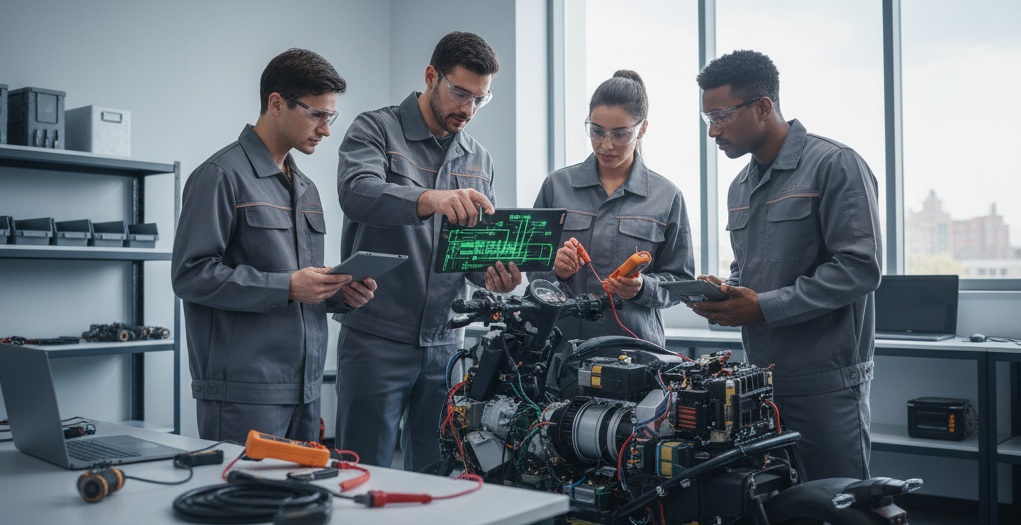
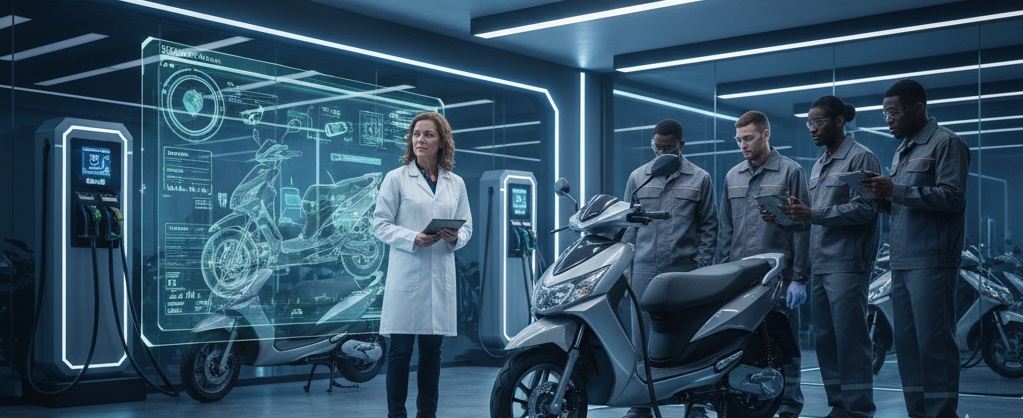
The EV Fault Diagnostics Enngineer Course is designed to develop specialized skills in identifying and analyzing faults in electric vehicle systems. It covers diagnostic tools and techniques for batteries, motors, controllers, power electronics, sensors, and onboard communication systems, along with essential safety practices. Through hands-on troubleshooting and real-world case studies, learners gain practical experience in quickly isolating and resolving EV issues. This course prepares participants for technical roles focused on ensuring reliability, performance, and minimal downtime in electric vehicle operations.
- 72 Hours (2 hours/day x 6 days/week x 6 weeks) OR at your own pace
- Hindi, English
- Learn & Get Certified
- Basic & Intermediate
- Hands-On Training
Online Course Fees
Offline Course Fees
About this course
The EV Fault Diagnostics Engineer Course is a 72-hour practical training program.
It is designed to prepare learners to systematically diagnose, analyze, and resolve electrical, electronic, and mechanical faults in electric vehicles (EVs), including two-wheelers, three-wheelers, and compact EV systems. The course emphasizes fault-finding techniques, real-time troubleshooting, and the use of advanced diagnostic tools widely used in EV service centers and fleet operations.
Through structured modules, participants learn:
– EV powertrain fundamentals: motors, controllers, batteries, BMS, chargers
– Common EV faults: motor failures, controller issues, wiring faults, thermal issues, voltage imbalance
– Battery diagnostics: cell imbalance, BMS protection triggers, charging faults
– Sensor and communication faults: throttle, PAS, hall sensors, temperature sensors, CAN/LIN basics
– Mechanical faults: brake wear, wheel issues, suspension problems, drivetrain alignment
– Use of diagnostic tools: multimeter, clamp meter, insulation tester, battery analyzer, CAN tools (intro)
– Fault code interpretation and system reboot procedures
– Thermal runaway indicators and safety precautions
– Step-by-step troubleshooting flowcharts and SOPs
– Repair techniques, component replacement, and post-repair validation
Hands-on sessions include live fault simulation, battery and controller testing, harness inspection, sensor-level diagnostics, motor performance analysis, and verifying EV operation after corrective actions.
By the end of the program, participants are prepared to:
– diagnose and rectify electrical, electronic, and mechanical faults in EVs,
– use professional diagnostic tools to identify root causes, and
– work as EV Fault Diagnostics Technicians, EV Service Specialists, or Workshop Technicians in EV service centers, fleet operations, and mobility startups.
This course provides essential knowledge and practical training to build industry-relevant skills.
- Online Course Fees: ₹3500, ₹2500 (incl. GST) (Excluding tools & equipment cost)
- Offline Course Fees: ₹13500, ₹12000 (incl. GST) (Excluding tools & equipment cost)
- Certification: TCoE
- Duration: 72 Hours (2 hours/day x 6 days/week x 6 weeks) OR at your own pace
What you'll learn
After this course you will learn:
- EV System Basics: Understand how electric vehicles function — from battery to motor and controller.
- Fault Identification: Learn to detect and interpret common faults in EV components and subsystems.
- Diagnostic Tools & Software: Get hands-on training with multimeters, scanners, and EV diagnostic software.
- Battery & BMS Troubleshooting: Master the techniques to analyze and fix battery and BMS-related issues.
- Motor & Controller Analysis: Diagnose problems related to BLDC motors, controllers, and power electronics.
- Wiring & Circuit Testing: Learn safe methods to inspect, test, and repair electrical connections.
- Data Interpretation: Understand fault codes, performance logs, and sensor data for accurate repairs.
- Preventive Maintenance Skills: Learn how to minimize faults and enhance the lifespan of EV components.
Course Content
Why take this course?
This course focuses on developing specialized skills to identify, analyze, and resolve faults in electric vehicle systems. You will learn advanced diagnostic techniques for batteries, motors, controllers, power electronics, sensors, and onboard communication systems, along with safety and testing procedures. As electric vehicles become more complex and widely adopted, skilled diagnostics technicians are essential to minimize downtime and ensure reliability. This course prepares you for high-demand technical roles in EV service centers, fleet operations, and manufacturing, making you a key contributor to the growth of electric mobility.
How to use online TCoE platform?
Tools and Equipment required
National Skill Development Mission
Module-1: Introduction to EV Components
- This module introduces learners to the essential components of electric vehicles (EVs), including batteries, motors, motor controllers, power electronics, sensors, and auxiliary systems.
- It covers the function, working principles, and interconnections of these components, providing a foundational understanding necessary for diagnosing and troubleshooting electrical faults in EV systems.
Module-2: Introduction of equipment and tools used
- This module familiarizes learners with the essential tools and equipment used for diagnosing and repairing electric vehicle (EV) faults.
- It covers multimeters, clamp meters, oscilloscopes, battery testers, diagnostic software, and safety equipment.
- Students will learn proper handling, usage, and maintenance of these tools, building the practical foundation required to identify, troubleshoot, and repair electrical issues in EV systems safely and efficiently.
Module-3: Battery Basics
- This module introduces learners to the fundamentals of electric vehicle batteries, including their types, construction, voltage, capacity, and state-of-charge principles.
- It covers how batteries function within an EV, common performance issues, and safety precautions.
- Understanding these basics equips students with the knowledge needed to diagnose, test, and maintain battery systems effectively during fault analysis.
Module-4: Motor Basics
- This module introduces learners to the fundamental concepts of electric motors used in EVs, including DC, BLDC, and induction motors.
- It covers motor construction, working principles, key parameters, and typical operational issues.
- Understanding motor fundamentals helps students identify performance problems, assess motor health, and perform accurate fault diagnostics in electric vehicle systems.
Module-5: Controller Basics
- This module introduces learners to the fundamental principles of electric vehicle controllers, which regulate the operation of motors and manage power flow.
- It covers controller types, working mechanisms, key parameters, and their role in ensuring efficient and safe EV performance.
- Understanding controllers equips students with the knowledge to diagnose faults, interpret error signals, and maintain proper functionality within electric vehicle systems.
Module-6: How to use various tools to find faults
- This module trains learners to effectively use diagnostic tools to identify and troubleshoot faults in electric vehicles.
- It covers the use of multimeters, clamp meters, oscilloscopes, battery testers, and diagnostic software to measure voltage, current, resistance, and signal patterns.
- Emphasis is placed on systematic testing procedures, interpreting readings, and safely pinpointing electrical issues, enabling students to accurately detect and resolve faults in EV systems.
ENROLL TODAY & GET 30% OFF ON ALL COURSES
Your Future Can’t Wait, Enroll Now and Save 30% On All Courses.
Related Courses

EV Bicycle Enngneer

EV Scooter Engineer
EV Motors Engineer
Electric Vehicles Engineer
See what our students have to say
With over a decade of experience, our mission is to produce future-ready skilled resources.
Battery Management System (BMS) Fault Diagnosis
The Battery Management System is the heart of any electric vehicle, responsible for monitoring and controlling the battery’s health, charge, and safety. In this topic, learners explore how to identify, analyze, and troubleshoot common BMS-related faults such as cell imbalance, overcharging, overheating, and communication errors. The module covers real-time diagnostic techniques, use of diagnostic tools, and interpretation of fault codes to ensure efficient and safe EV operation.
Job Opportunities
Here are some interesting job opportunities after completing the EV Fault Diagnostics Engineer course:
-
EV Diagnostic Technician – Specialize in identifying, analyzing, and repairing faults in electric vehicles using advanced diagnostic tools and software.
-
Battery Maintenance Engineer – Focus on detecting and resolving issues in EV battery packs, including cell degradation, thermal faults, and BMS-related errors.
-
EV Service and Maintenance Engineer – Work in service centers or OEMs to handle preventive maintenance, fault detection, and performance optimization of electric vehicles.
-
EV Systems Analyst – Analyze data from different EV subsystems (motor, controller, battery) to predict faults and improve system reliability.
-
Field Service Technician (EV) – Provide on-site diagnostics and repair support for electric two-wheelers, three-wheelers, or four-wheelers.
-
Quality and Testing Engineer – Test EV components and subsystems under various conditions to detect potential faults before market release.
-
Technical Support Specialist (EV Diagnostics Tools) – Work with EV tool manufacturers to assist users and workshops in interpreting diagnostic data and troubleshooting issues.
-
EV Trainer or Instructor – Train aspiring technicians and engineers on EV diagnostics, repair, and maintenance best practices.
Frequently asked questions
What is EV Fault Diagnostics?
EV Fault Diagnostics is the process of identifying, analyzing, and resolving electrical and mechanical faults in electric vehicles using specialized tools, sensors, and software. It ensures the safe and efficient performance of the EV.
Who can take this course?
This course is ideal for diploma and engineering students, EV technicians, mechanics, and anyone interested in understanding how to troubleshoot and maintain electric vehicles.
What skills will I gain from this course?
You’ll learn how to use diagnostic tools, interpret error codes, analyze faults in batteries, motors, controllers, and charging systems, and apply systematic troubleshooting techniques.
Do I need any prior experience with EVs?
No prior experience is required. The course starts with EV fundamentals and gradually progresses to advanced diagnostic and repair techniques.
What kind of practical training will I get?
Learners will get hands-on experience with real or simulated EV components—such as battery systems, motor controllers, and diagnostic scanners—to perform fault detection and rectification.
How is this course useful for my career?
With the rising adoption of electric vehicles, EV diagnostics and maintenance experts are in high demand. This course prepares you for roles in EV workshops, service centers, and manufacturing industries.