
Drone Assembly Engineer Course
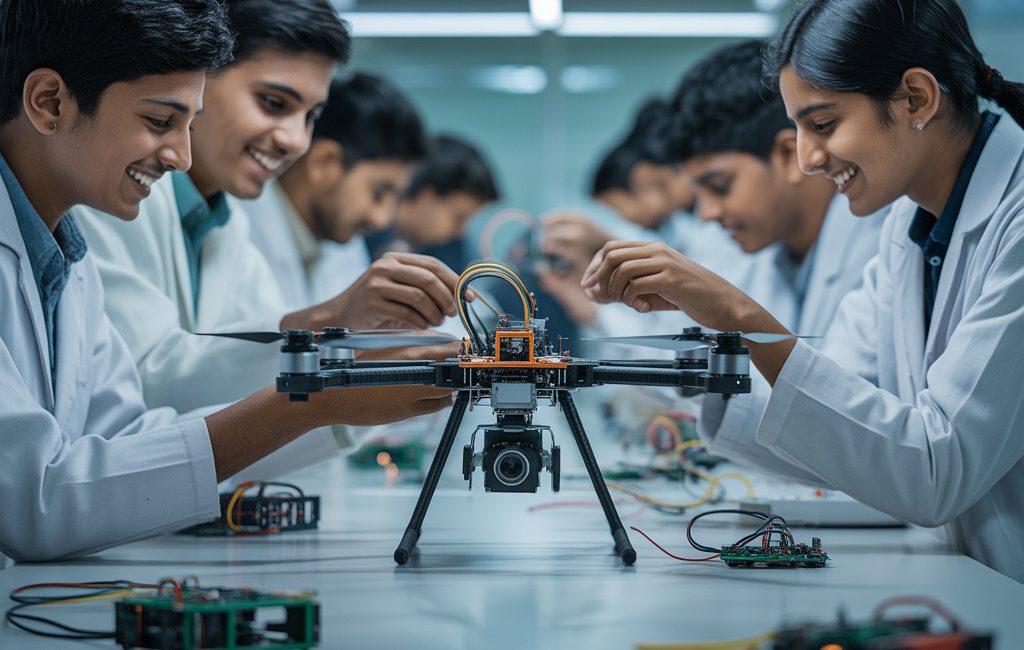
The Drone Assembly Engineer Course is a hands-on program designed to train learners in the construction and integration of unmanned aerial vehicles. It covers drone components such as frames, motors, propellers, flight controllers, sensors, power systems, and payloads. Through practical assembly, calibration, and testing activities, learners gain real-world skills in building flight-ready drones. This course prepares participants for technical roles in drone manufacturing, servicing, and support, aligned with the rapidly growing unmanned aviation industry.
- 36 hours (2 hours/day x 6 days/week x 6 weeks) OR at your own pace
- Hindi, English
- Learn & Get Certified
- Basic & Intermediate
- Hands-On Training

Online Course Fees
Offline Course Fees
About this course
Drone Assembly Engineer Course is a hands-on skill development course designed to train learners in building, assembling, and testing unmanned aerial vehicles (UAVs) from the ground up. The course covers key components such as frames, motors, propellers, flight controllers, ESCs, power systems, wiring, and basic payload integration. Learners gain practical knowledge of drone electronics, mechanical assembly, calibration, safety practices, and basic troubleshooting. This course prepares students for entry-level roles in drone manufacturing, maintenance, startups, and service centers, supporting the rapidly growing drone ecosystem across industries such as agriculture, surveying, logistics, defense, and inspection.
This course provides essential knowledge and practical training to build industry-relevant skills.
- Online Course Fees: ₹3500, ₹2000 (incl. GST) (Excluding tools & equipment cost)
- Offline Course Fees: ₹8500, ₹7000 (incl. GST) (Excluding tools & equipment cost)
- Certification: TCoE
- Duration: 36 hours (2 hours/day x 6 days/week x 6 weeks) OR at your own pace
What you'll learn
After this course you will learn:
- Drone Basics & Components – Understand drone types, frames, motors, ESCs, propellers, flight controllers, and power systems.
- Mechanical Assembly Skills – Learn how to assemble frames, mount motors, balance propellers, and integrate structural components.
- Electrical Wiring & Soldering – Gain hands-on skills in wiring, soldering, connector assembly, power distribution, and circuit safety.
- Flight Controller Setup – Configure flight controllers (like Pixhawk, APM, Betaflight), calibrate sensors, and perform firmware setup.
- Sensor & Module Integration – Install and integrate GPS, IMU, barometer, telemetry modules, and payload systems.
- Battery & Power Management – Understand LiPo batteries, charging safety, voltage regulation, and power optimization techniques.
- Testing, Tuning & Troubleshooting – Perform pre-flight checks, PID tuning, signal testing, vibration analysis, and common fault diagnosis.
- Drone Safety & Compliance – Learn safe handling, assembly standards, maintenance practices, and basic regulatory guidelines.
Course Content
Why take this course?
This course equips you with the practical skills to build, assemble, and maintain drones, covering components such as frames, motors, controllers, sensors, and payload systems. You will gain hands-on experience in troubleshooting, calibration, and ensuring flight readiness, which are critical for safe and efficient drone operations. With the drone industry expanding across agriculture, surveying, logistics, inspection, and entertainment, skilled assembly technicians are in high demand. This course prepares you for technical roles in drone manufacturing, service, and maintenance, laying the foundation for a career in the fast-growing unmanned aviation sector.
How to use online TCoE platform?
Tools and Equipment required
National Skill Development Mission
Module-1: Introduction to Drones
- This module introduces learners to the world of drones, covering the basics of unmanned aerial vehicles (UAVs).
- Students will explore drone types, components, and applications across industries such as agriculture, logistics, surveillance, and recreation.
- The module also highlights essential terminology, safety guidelines, and regulations.
- By the end of this module, learners will have a foundational understanding of drones, preparing them for assembly, operation, and maintenance in subsequent modules.
Module-2: Regulatory Framework
- This module introduces learners to the legal and regulatory requirements for operating drones safely and responsibly.
- It covers national and international drone laws, licensing requirements, airspace restrictions, privacy considerations, and safety standards.
- Students will also learn about compliance procedures and documentation necessary for lawful drone operations.
- By the end of this module, learners will understand the regulatory framework governing drones, ensuring safe, legal, and responsible flying practices.
Module-3: Components
- This module familiarizes learners with the essential components of a drone and their functions.
- It covers the frame, motors, propellers, flight controllers, batteries, sensors, and communication systems.
- Students will also learn how each component contributes to flight, stability, and control.
- By the end of this module, learners will have a clear understanding of drone hardware, preparing them for assembly, calibration, and maintenance tasks in later modules.
Module-4: Flight Dynamics
- This module introduces the principles of drone flight and the forces that govern it.
- Learners will explore key concepts such as lift, thrust, drag, and weight, as well as stability, control, and maneuvering.
- The module also covers flight modes, navigation basics, and how sensors like gyroscopes and accelerometers help maintain balance and orientation.
- By the end of this module, students will understand how drones fly and respond to controls, laying the foundation for practical flying and troubleshooting.
Module-5: Operating a drone using a simulator
- This module teaches learners how to operate drones safely using simulation software.
- Students will practice take-off, landing, hovering, and basic maneuvers in a virtual environment, reducing risks associated with real-world flights.
- The module also introduces different flight modes, mission planning, and emergency handling.
- By the end of this module, learners will gain confidence and essential piloting skills, preparing them for actual drone operation.
ENROLL TODAY & GET 30% OFF ON ALL COURSES
Your Future Can’t Wait, Enroll Now and Save 30% On All Courses.
Related Courses
Drone Service Technician

Drone Maint. & Repair Technician: Level-1

Drone Maint. & Repair Technician: Level-2

Drone Engineer
See what our students have to say
With over a decade of experience, our mission is to produce future-ready skilled resources.




Understanding the Heart of the Drone – The Flight Controller
The flight controller is often called the brain of the drone — it processes all the sensor data and user commands to keep the drone stable in the air. In this module, you’ll explore how the flight controller manages balance, altitude, and direction, and how to configure it for smooth performance. You’ll also learn how to troubleshoot and fine-tune its settings to achieve precise control during flight — a crucial skill for any drone enthusiast or technician.
Job Opportunities
Here are some interesting job opportunities after completing the Drone Basics- Assembly and Repair course:
Drone Assembly Technician
Build and assemble drones for commercial, industrial, or educational purposes, ensuring precision and quality in every component.Drone Repair Specialist
Diagnose technical issues, replace faulty parts, and restore damaged drones to working condition — a vital role in drone service centers.Drone Maintenance Engineer
Perform regular inspections and maintenance of drones used in sectors like agriculture, surveying, and cinematography to ensure reliable performance.Drone Service Center Executive
Work in service centers managing customer repairs, spare parts, and quality control of drone assemblies.Drone Operator / Pilot Assistant
Assist licensed pilots in preparing, calibrating, and maintaining drones for aerial photography, mapping, or industrial inspections.Drone Parts & Accessories Retail Specialist
Work with drone retail and manufacturing companies, providing assembly support, technical guidance, and customer service.Entrepreneur in Drone Services
Start your own venture offering drone repair, customization, and maintenance services — a growing field with strong demand in India and globally.
Frequently asked questions
What is this course about?
This course introduces you to the fundamentals of drone technology, including how drones work, how to assemble different components, and how to troubleshoot and repair common issues.
Do I need any prior experience to join this course?
No prior experience is required. The course is designed for beginners who want to start learning about drones from scratch.
What kind of drones will I learn to assemble?
You will primarily learn about quadcopters — the most common and versatile type of drone — and gain practical skills that apply to similar models.
Will I get hands-on training?
Yes! The course includes guided practical sessions on assembling, calibrating, and repairing drone components.
What tools or equipment are needed?
Basic tools like screwdrivers, soldering iron, multimeter, and drone components (motors, propellers, flight controller, etc.) will be used. A list will be provided at the start of the course.