Atal Tinkering Labs
What are Atal Tinkering Labs?
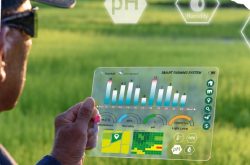
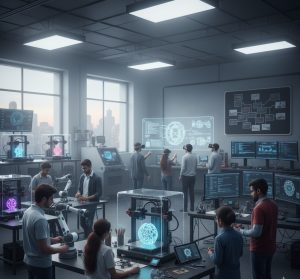
Atal Tinkering Labs are dynamic, innovation-driven learning spaces designed to spark creativity, curiosity, and problem-solving skills among young students. Equipped with cutting-edge tools such as robotics kits, 3D printers, sensors, drones, and IoT devices, ATLs encourage students to understand concepts through hands-on experimentation rather than textbooks alone. These labs create an exciting environment where ideas come alive, and learning feels like exploration.
What makes ATLs truly inspiring is their mission to nurture the next generation of thinkers, innovators, and entrepreneurs. Students are encouraged to design, build, test, and refine real-world solutions to real-world problems—developing confidence and future-ready skills along the way. By fostering a culture of innovation and imagination at the school level, Atal Tinkering Labs are shaping young minds to become tomorrow’s creators and changemakers in science, technology, and beyond.
Why Learn Atal Tinkering Lab Courses?
Learning through Atal Tinkering Labs helps students develop the skills needed for the future—creativity, problem-solving, and innovation. ATL introduces learners to hands-on technology such as robotics, electronics, coding, IoT, and 3D printing, allowing them to turn ideas into real prototypes. By exploring and experimenting in a maker-friendly environment, students build confidence, curiosity, and an entrepreneurial mindset. This course empowers young innovators to understand real-world problems, design practical solutions, and participate in national innovation challenges, making them future-ready and aligned with India’s vision of fostering a culture of scientific thinking and innovation.
Type of Industries where ATL Courses are useful
Electronics & Embedded Systems
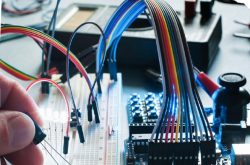
Skills in basic circuits, sensors, microcontrollers (Arduino, ESP), and automation prepare students for roles in electronics design and embedded development.Robotics & Automation Industry
Hands-on robotics and mechatronics projects help learners understand real-world industrial robots, automation systems, and intelligent machines.Information Technology & Software Development
Coding, AI, and machine learning fundamentals taught in ATL provide a strong foundation for IT, software programming, app development, and data technologies.Internet of Things (IoT) & Smart Systems
ATL projects involving sensors, data logging, and connectivity lead into careers in smart cities, smart homes, wearable tech, and industrial IoT.3D Printing & Digital Manufacturing
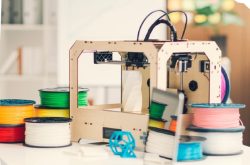
Skills in CAD design and additive manufacturing match the needs of product design, prototyping, custom manufacturing, and engineering R&D.Renewable Energy & Sustainability
ATL encourages solar, wind, and environmental sensor projects, which directly relate to green technology, energy auditing, and sustainability engineering.Automotive & Electric Vehicle
Concepts of electronics, sensors, automation, and prototyping prepare learners for EV technology, automotive electronics, and intelligent mobility solutions.Aerospace & Drone Technology
ATL exposes learners to aerodynamics, electronics, and control systems—key for drone innovation, UAV research, and aerospace engineering.Biotechnology & Healthcare Technology
Problem-solving and prototyping skills are relevant for medical devices, diagnostics, wearable health monitors, and biotech innovation.Education, EdTech & STEM Training
ATL-trained learners can grow into future trainers, STEM educators, curriculum designers, or EdTech innovators.Research & Innovation Ecosystems
ATL fosters inquiry, experimentation, and design thinking—core skills for R&D labs, incubation centers, tech startups, and innovation hubs.
What you'll learn
In this course, you’ll explore the exciting world of innovation through hands-on learning in robotics, electronics, coding, 3D printing, and the Internet of Things (IoT). You’ll learn how to design creative solutions, build working prototypes, and understand real-world technologies using sensors, microcontrollers, and basic programming. The course will also strengthen your problem-solving abilities, design thinking skills, teamwork, and scientific curiosity. By the end, you’ll be equipped to turn ideas into practical models, participate confidently in innovation challenges, and develop the mindset of a young inventor and future-ready technologist.
Qualifications Required
Any school going students from VI to XII standard.
Time Required to Learn
Typically our courses are 36 hours (introductory / crash course) to 600 hours (long term).
A student can spend 2 hours / day (in 3 weeks) to 6 hours / day (in 1 week) to complete a 36 hours course.
A school/ college going student can typically spend 4 hours per week (in 9 weeks) to 6 hours per week (6 weeks), to complete the 36 hours course.
For a 600 hours course, a student may need to give more time per week – typically 20 hours per week (total 30 weeks = 7 months) to 30 hours per week (total 20 weeks = 5 months) to complete the course.
Explore Atal Tinkering Labs
ATL Level-1
ATL Level-2