Solar Panel installation Engineer Course
The Solar Panel Installation Technician Course is a hands-on program designed to train learners in the installation, commissioning, and basic maintenance of solar photovoltaic (PV) panels. It covers site assessment, panel mounting, electrical connections, safety procedures, and troubleshooting techniques. Through practical exercises, participants gain real-world experience in making PV systems operational and efficient. This course prepares learners for job-ready roles in the expanding solar energy sector, supporting the deployment of clean and sustainable power solutions.
- 600 Hours (2 hours/day x 6 days/week x 6 weeks) OR at your own pace
- Hindi, English
- Learn & Get Certified
- Basic & Intermediate
- Hands-On Training
About this course
The Solar Panel Installation Engineer Course is a 72 hours practical training program.
It is designed to prepare learners for the complete mechanical and electrical installation of solar photovoltaic (PV) panels in residential, commercial, and small industrial setups. The course blends essential theory with extensive field practice, enabling learners to safely and accurately install solar panels while following industry and MNRE standards.
Through structured modules, participants learn:
– Basics of solar energy and PV technology
– Types of solar panels and selection criteria
– Tools, safety gear, and installation best practices
– Panel handling, positioning, tilt angle, and orientation
– Mechanical mounting on rooftop, RCC, tin-shed, and ground structures
– DC electrical wiring, cable routing, MC4 connectors, and string formation
– Earthing, surge protection, and safety compliance
– System testing, troubleshooting, and documentation
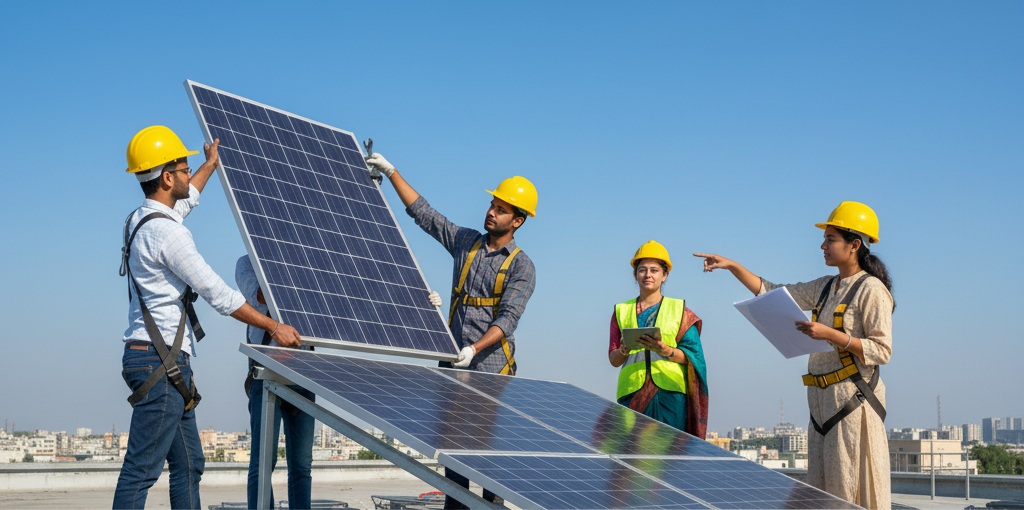
Hands-on sessions include panel alignment, clamping, drilling, wiring, torque application, continuity testing, insulation testing, and verifying correct panel string configuration. Trainees also learn pre-installation site assessment, layout planning, and basic interaction with inverters and charge controllers.
By the end of the program, participants are prepared to:
– perform complete solar panel installation and wiring,
– assist in PV system commissioning and maintenance, and
– work as Solar Installation Technicians, Field Installers, or Solar Maintenance Assistants across renewable energy projects.
This course provides essential knowledge and practical training to build industry-relevant skills.
- Online Course Fees: ₹3500, ₹2500 (incl. GST) (Excluding tools & equipment cost)
- Offline Course Fees: ₹20000, ₹17500 (incl. GST) (Excluding tools & equipment cost)
- Certification: TCoE
- Duration: 600 Hours (2 hours/day x 6 days/week x 6 weeks) OR at your own pace
What you'll learn
After this course you will learn:
- Basics of Solar Energy & PV Technology: Understand how solar energy works, types of solar PV systems, key components, and fundamental electrical concepts.Basics of Solar Energy: Understand how solar power works, including energy conversion, solar radiation, and PV system principles.
- Site Assessment & Solar Potential Analysis: Learn to evaluate rooftops and open areas, check shading, calculate tilt/azimuth, and assess the feasibility of PV installation.
- PV Module Mounting & Structure Assembly: Gain hands-on skills in mounting solar panels, assembling module structures, and ensuring correct mechanical alignment.
- Electrical Wiring & System Integration: Learn to connect modules, inverters, junction boxes, cables, and protective devices following safety and quality standards.
- Installation of Inverters & BOS Components: Understand how to install, configure, and test inverters, earthing systems, surge protection devices, and other Balance-of-System parts.
- Testing, Commissioning & Troubleshooting: Develop skills in using testing tools, identifying installation faults, performing system checks, and ensuring proper commissioning.
- Safety Practices & Quality Standards: Get trained in electrical and working-at-height safety, PPE usage, fire safety, and adherence to MNRE/IS standards and guidelines.
- Operation, Maintenance & Customer Support: Learn routine maintenance tasks, cleaning procedures, documentation, and how to guide customers on system usage and performance.
Course Content
Why take this course?
This course prepares you with hands-on skills to install, test, and commission solar photovoltaic panels for residential, commercial, and industrial applications. You will learn site evaluation, panel mounting, electrical connections, safety standards, and basic system troubleshooting. As the demand for clean and affordable energy continues to grow, skilled solar panel installation technicians are essential to expand solar adoption. This course offers job-ready expertise, stable career opportunities, and a chance to contribute directly to sustainable and renewable energy development.
How to use online TCoE platform?
Tools and Equipment required
National Skill Development Mission
Module 1: Basics of Electricity & Solar Energy
By completing this module, students will be able to:
- Understand basic electrical terms & laws
- Explain how solar energy is converted into electricity
- Identify types of PV systems and their applications
- Use clamp meter for basic voltage/current measurements
- Build and test a simple DC circuit
Module 2: Solar PV System Components
By the end of this module, students will be able to:
- Identify PV modules, inverters, batteries, charge controllers, and BOS components.
- Understand civil & mechanical materials used in mounting foundations
- Demonstrate safe series/parallel panel connections
- Perform cable crimping, termination, and continuity testing
- Understand protection systems (DCDB, ACDB, earthing, LA)
- Familiarize with heavy equipment used at solar sites
- Relate classroom learning to real solar installations (via field study)
Module 3: Installation Practices
By completing this module, students will:
- Perform site survey and layout for solar PV system
- Install mounting structures and align PV modules safely
- Carry out DC & AC wiring with proper termination
- Install batteries and charge controllers in hybrid systems
- Construct earthing pits and test earth resistance
- Use PPE and follow safety protocols at site
- Conduct system testing (Voc, Isc, polarity) and commissioning
- Record installation and commissioning results in log sheets
Module 4: Safety & Standards
Drone Assembly, drone inspection, Maintenance, Pump and nozzle setup and spray control
Module 5: Testing, Troubleshooting & Maintenance
Build a fully functional basic drone
Module 6: Policies, Incentives & Documentation
ENROLL TODAY & GET 30% OFF ON ALL COURSES
Your Future Can’t Wait, Enroll Now and Save 30% On All Courses.
Related Courses
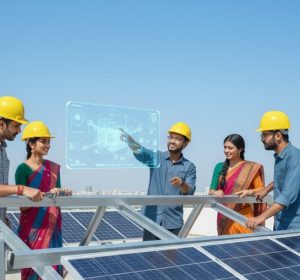
Solar Structure Installation Technician
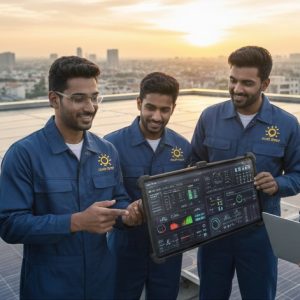
Solar PV Monitoring Technician

Solar PV Maintenance Technician
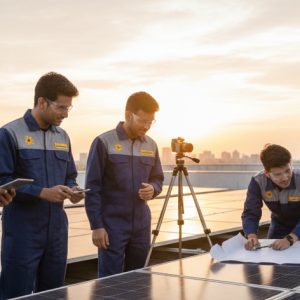
Solar PV Site Surveyor
See what our students have to say
With over a decade of experience, our mission is to produce future-ready skilled resources.
Solar PV System Design and Configuration
This module focuses on designing efficient and reliable solar power systems tailored to different energy needs. Learners will explore how to assess site conditions, calculate energy requirements, select suitable components, and configure PV arrays for maximum output. The topic also covers inverter sizing, battery selection, and system layout planning. By mastering solar PV system design, students gain the ability to create safe, cost-effective, and high-performance installations — a crucial skill for any solar technician or renewable energy professional.
Job Opportunities
Here are some interesting job opportunities after completing the Solar PV Rooftop course:
Solar PV Installer – Install and assemble solar panels, wiring, and inverters on residential or commercial sites.
Solar Maintenance Technician – Perform routine maintenance, system inspections, and repairs to ensure peak solar performance.
Site Engineer (Solar Projects) – Oversee installation projects, manage teams, and ensure safety and quality standards are met.
Solar System Designer – Design customized PV systems based on site analysis, energy requirements, and client needs.
Solar Project Assistant / Coordinator – Support project planning, logistics, and execution in solar energy companies.
Energy Auditor / Consultant – Assess energy consumption and recommend solar-based solutions for cost and energy efficiency.
Entrepreneur / Solar Service Provider – Start your own business offering solar installation and maintenance services.
- Renewable Energy Technician – Work with green energy firms focusing on sustainable and smart energy systems.
Frequently asked questions
Do I need any prior technical background to join this course?
No prior experience is required! The course starts with solar energy basics and gradually builds up to advanced installation and troubleshooting techniques.
Will there be practical, hands-on training?
Yes! You’ll gain real-world experience in installing panels, wiring systems, connecting inverters, and testing solar setups safely and efficiently.
What tools and equipment will I learn to use?
Yes. Reputable training providers emphasize operational liability, mandatory insurance coverage, and contractual obligations. This ensures that pilots understand both the legal and financial protections necessary for commercial operations.
You’ll get hands-on experience using multimeters, wiring kits, mounting tools, and solar testing instruments during practical sessions.
What job opportunities are available after completing this course?
You can work as a Solar PV Installer, Maintenance Technician, Site Engineer, or Solar Project Assistant, or even start your own solar installation business.
Will I receive a certificate after the course?
Yes, a completion certificate will be awarded to validate your technical skills and make you job-ready for the solar energy sector.