
EV Bicycle Engineer Course
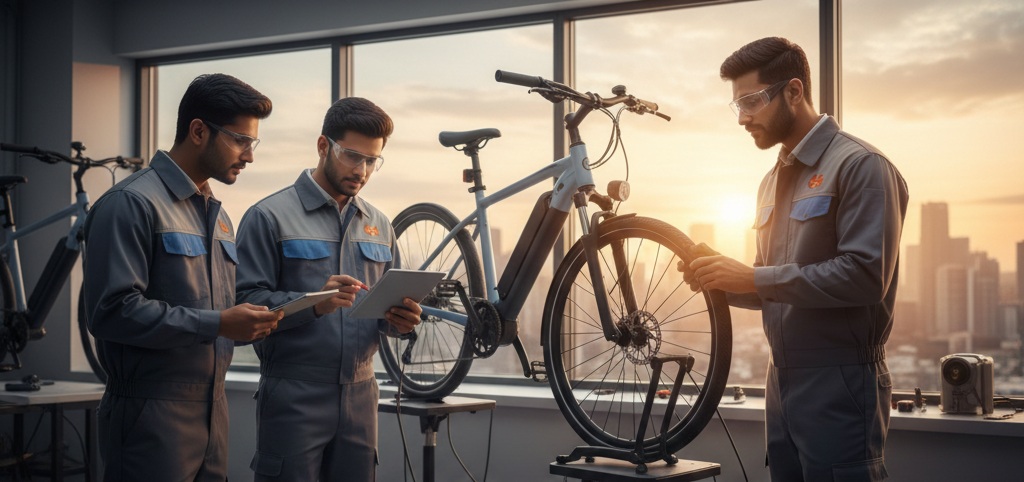
The EV Bicycle Engineer Course is designed to provide hands-on training in the assembly, servicing, and maintenance of electric bicycles. It covers key systems such as electric motors, batteries, controllers, charging units, and safety components. Through practical workshops and real-world scenarios, learners gain the skills needed to diagnose issues and ensure reliable performance. This course prepares participants for entry-level technical roles in EV service centers, rental operations, and manufacturing units within the rapidly growing electric mobility sector.
- 72 Hours (2 hours/day x 6 days/week x 6 weeks) OR at your own pace
- Hindi, English
- Learn & Get Certified
- Basic & Intermediate
- Hands-On Training
Online Course Fees
Offline Course Fees
About this course
The EV Bicycle Engineer Course is a 72-hour practical training program.
It is designed to prepare learners with the essential skills required to assemble, service, diagnose, and maintain electric bicycles (e-bikes) used for personal mobility, delivery services, and commercial applications. The course blends foundational electrical knowledge with hands-on mechanical practice, enabling trainees to work confidently with modern EV bicycle systems.
Through structured modules, participants learn:
– Basics of electric mobility and e-bike components
– Types of motors (BLDC hub motors, mid-drive motors) and their operation
– Battery packs, BMS basics, charging systems, connectors, and safety
– Controller wiring, throttle, PAS sensors, and display interfaces
– Mechanical components: brakes, gears, wheels, suspension, chain systems
– Electrical and mechanical assembly of an e-bike
– Common fault identification in motors, batteries, controllers, and wiring
– Use of diagnostic tools: multimeter, continuity tester, battery tester
– Preventive maintenance, cleaning, alignment, and calibration
– Safety procedures, troubleshooting workflows, and documentation
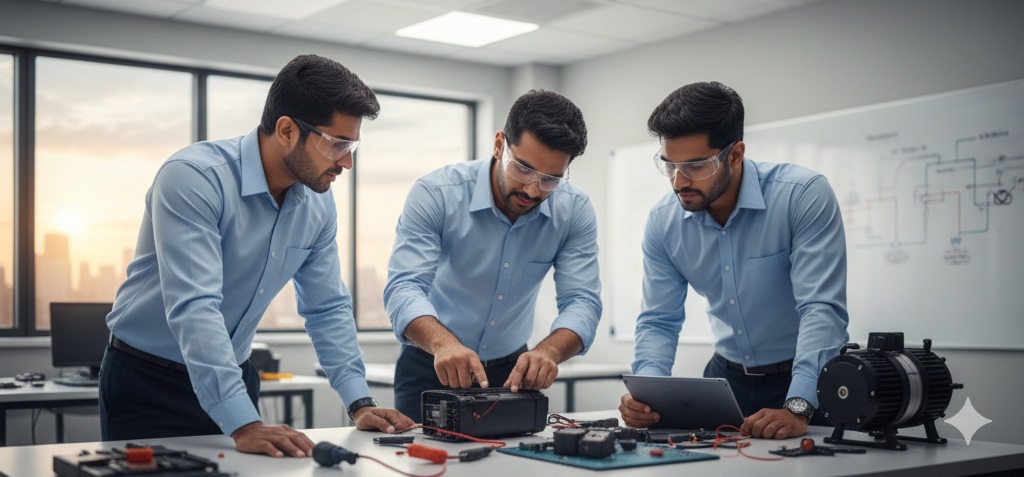
Hands-on sessions include motor testing, controller setup, battery inspection, electrical wiring repair, brake and gear tuning, and complete e-bike assembly and servicing.
By the end of the program, participants are prepared to:
– assemble and repair electric bicycles,
– diagnose and fix electrical and mechanical faults, and
– work as EV Bicycle Technicians, E-Mobility Service Technicians, or Workshop Assistants in EV service centers, rental services, and mobility startups.
This course provides essential knowledge and practical training to build industry-relevant skills.
- Online Course Fees: ₹13500, ₹12000 (incl. GST) (Excluding tools & equipment cost)
- Offline Course Fees: ₹13500, ₹12000 (incl. GST) (Excluding tools & equipment cost)
- Certification: TCoE
- Duration: 72 Hours (2 hours/day x 6 days/week x 6 weeks) OR at your own pace
What you'll learn
After this course you will learn:
- E-Bicycle Components: Understand key parts including batteries, motors, controllers, and sensors, and how they work together.
- Maintenance and Troubleshooting: Learn to inspect, maintain, and repair common issues to ensure safe and smooth operation.
- Battery Management: Explore charging techniques, battery care, and optimization for longer life and better performance.
- Motor and Drive Systems: Gain insights into different types of motors, drivetrain systems, and their efficiency.
- Safety and Regulations: Understand safety protocols, riding standards, and regulatory requirements for e-bicycles.
- Performance Optimization: Learn how to monitor and improve the speed, range, and overall efficiency of e-bicycles.
Course Content
Why take this course?
This course equips you with practical skills to assemble, service, and maintain electric bicycles and their key systems, including motors, batteries, controllers, and charging units. You will learn diagnostics, safety practices, and basic troubleshooting to ensure reliable and efficient operation. With the rapid growth of eco-friendly mobility and last-mile transportation, EV bicycles are increasingly in demand. This course prepares you for job-ready roles in EV service centers, rental fleets, and manufacturing units, while enabling you to contribute to sustainable and affordable urban mobility.
How to use online TCoE platform?
Tools and Equipment required
National Skill Development Mission
Module-1: Introduction to EV and EV market
- This module introduces learners to the fundamentals of electric vehicles, with a focus on 2-wheeler scooters.
- It covers the working principles, components, and benefits of EVs compared to conventional vehicles.
- Additionally, the module provides an overview of the global and Indian EV market, trends, adoption drivers, and emerging opportunities, helping students understand the growing significance and potential of electric mobility in the 2-wheeler segment.
Module-2: Introduction of equipment and tools used
- This module familiarizes learners with the essential tools and equipment required for assembling, maintaining, and troubleshooting electric bicycles.
- It covers hand tools, multimeters, battery testers, torque wrenches, diagnostic devices, and safety equipment.
- Students will learn proper handling, usage, and maintenance of these tools, building the practical foundation necessary for working safely and effectively with E-bicycle systems.
Module-3: Battery assembly for E-bicycle
- This module introduces learners to the process of assembling battery packs for electric bicycles.
- It covers cell types, series and parallel configurations, wiring, and integration with battery management systems (BMS).
- Emphasis is placed on safety, proper handling, and ensuring reliable connections, enabling students to build efficient, durable, and safe battery packs tailored for E-bicycle applications.
Module-4: Motor basics for E-bicycle
- This module introduces learners to the fundamental concepts of motors used in electric bicycles, such as hub motors and mid-drive motors.
- It covers their construction, working principles, efficiency, and role in determining speed, torque, and overall performance.
- By understanding motor basics, students will gain the knowledge needed to select, operate, and maintain motors effectively in E-bicycle systems.
Module-5: E-bicycle electric system design
- This module focuses on the design and integration of the complete electric system for an E-bicycle.
- It covers the connection of the battery, motor, controller, wiring, and auxiliary components to create an efficient and reliable drive system.
- Students will learn principles of power distribution, system sizing, and safety considerations, enabling them to design optimized electric systems that enhance the performance and durability of E-bicycles.
Module-6: Assembly of E-bicycle
- This module guides learners through the step-by-step process of assembling an electric bicycle.
- It covers installing the motor, mounting the battery pack, connecting the controller and wiring system, and integrating auxiliary components such as displays and sensors.
- Emphasis is placed on alignment, secure connections, safety practices, and quality checks, enabling students to build a fully functional E-bicycle ready for testing and use.
Module-7: Testing of E-bicycle and repair
- This module focuses on evaluating the performance, safety, and reliability of an assembled E-bicycle.
- Learners will explore methods for testing the battery, motor, controller, and wiring connections, as well as checking overall ride performance.
- The module also covers diagnosing common issues, troubleshooting faults, and performing necessary repairs to ensure optimal operation.
- By the end, students will be able to confidently test, maintain, and repair E-bicycles for long-term use.
ENROLL TODAY & GET 30% OFF ON ALL COURSES
Your Future Can’t Wait, Enroll Now and Save 30% On All Courses.
Related Courses
EV Scooter Engineer
EV Motors Engineer
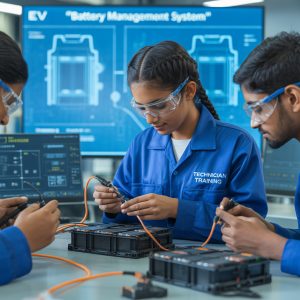
Battery Systems Engineer
Electric Vehicles Engineer
See what our students have to say
With over a decade of experience, our mission is to produce future-ready skilled resources.
Battery Management and Optimization
This topic focuses on understanding the different types of e-bicycle batteries, their charging cycles, maintenance, and troubleshooting. Learners will explore techniques to maximize battery life, improve range, and ensure safe operation. Mastering battery management is essential for efficient performance, cost savings, and the overall reliability of electric bicycles.
Job Opportunities
Here are some interesting job opportunities after completing the E-Bicycle course:
E-Bicycle Technician
Maintain, repair, and troubleshoot electric bicycles in workshops or service centers.Battery and Motor Specialist
Focus on battery management, motor performance, and electrical system optimization for e-bikes.E-Mobility Service Engineer
Provide technical support, installation, and preventive maintenance for e-bicycle fleets.E-Bike Sales and Support Executive
Guide customers on product selection, usage, and after-sales service for electric bicycles.Performance Analyst / Optimization Specialist
Analyze e-bike performance data to improve efficiency, range, and reliability.E-Mobility Consultant
Advise businesses or municipalities on adopting electric bicycles for sustainable transportation.Technical Trainer – E-Bicycles
Train new technicians or enthusiasts in repair, maintenance, and performance optimization.- Start-up Entrepreneur in E-Mobility
Launch services, repair shops, or rental fleets focusing on electric bicycles and sustainable transport.
Frequently asked questions
What is the main focus of this course?
The course focuses on understanding the technology, components, and maintenance of electric bicycles, along with practical skills to optimize their performance.
Do I need prior technical knowledge to join?
No prior experience is required. Basic understanding of electrical systems or bicycles can help but the course covers all essential concepts from scratch.
Will the course cover battery care and charging?
Yes, you’ll learn about different battery types, proper charging techniques, maintenance, and ways to extend battery life.
Is this course suitable for working professionals or hobbyists?
Absolutely! It is ideal for e-mobility enthusiasts, bicycle technicians, engineers, and anyone interested in sustainable transport.
Will I learn how to troubleshoot e-bicycles?
Yes, the course teaches hands-on troubleshooting techniques for common electrical and mechanical issues in e-bicycles.