
Electric Car Technology & Retrofitting Course

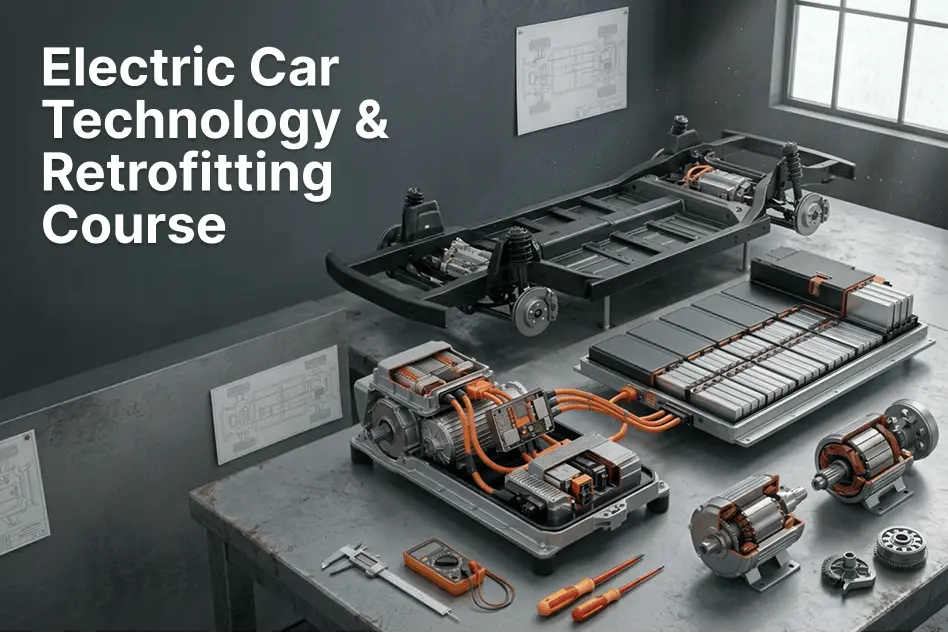
The Electric Car Technology & Retrofitting Course provides hands-on training in EV car architecture, traction motors, batteries, BMS, charging systems, and ICE-to-EV conversion, covering high-voltage safety, powertrain integration, and compliance.

Course Stats
4.4
850+ course reviews
Courses Hands-On Training
Languages English | हिन्दी
Career Placement Assistance

About Course

The Electric Car Technology & Retrofitting Course is a 72-hour (12-day) practical training program designed to build job-ready skills in electric car systems and ICE-to-EV conversion. Week 1 builds a strong foundation in EV architecture, traction motors, inverters, batteries, BMS, charging and high-voltage safety. Week 2 takes you into retrofitting, where you plan a complete conversion: donor vehicle selection, motor and battery sizing, electrical and mechanical integration, compliance and validation.

By the end of the course, learners can read EV wiring diagrams, trace power-flow paths, size a battery pack, select major components and present a complete retrofit design with a bill of materials and a test and compliance plan.

What you'll learn

Course Content

Sub-heading: Mostly practical training from the first day.

Week-wise Training Overview

Week Duration Focus Area Coverage
Week 1 36 hours Electric Car Technology & Systems EV architecture, traction motors, inverters, batteries, BMS, charging, electrical fundamentals and HV safety.
Week 2 36 hours Electric Car Retrofitting & Final Project ICE-to-EV conversion planning, component selection, powertrain integration, electrical and mechanical design, compliance and validation.

Week 1 – Electric Car Technology and Fundamentals (36 hours)

Introduction to electric cars; BEV, HEV, PHEV; comparison with ICE cars; EV architecture and major components; high-voltage safety orientation

Automotive electrical fundamentals: voltage, current, power, energy, wiring, fuses, relays, contactors, precharge circuits, HV interlocks

BLDC, PMSM, induction motors; torque-speed characteristics, regenerative braking, reduction gearbox and differential

Motor controllers, traction inverters, DC-DC converters, vehicle control unit (VCU), throttle and brake signals

EV batteries: cell chemistry, configurations, battery pack, SOC, SOH, BMS, battery safety and thermal management

EV charging: AC/DC charging, onboard charger, charging connectors, charging communication, charging infrastructure; system identification practical

Practical outcomes: Identify major EV car components, trace power-flow paths, interpret a basic wiring diagram, examine a battery/BMS trainer and identify motor-controller connections.

Week 2 – Electric Car Retrofitting and Conversion (36 hours)

Introduction to ICE-to-EV conversion; feasibility, donor vehicle selection, vehicle weight, space and performance targets

Electric motor selection, inverter/controller matching, reduction ratio, torque requirements, mounting considerations and drivetrain design

Battery pack sizing: voltage, Ah, kWh, driving range, discharge current, BMS, protection, thermal management and enclosure selection

Retrofitting electrical architecture: VCU, DC-DC, OBC, contactors, precharge, HV distribution, wiring harness, vehicle interfaces and instrumentation

Mechanical integration, braking/regen integration, weight distribution, mounting design, functional safety, Indian regulations and approval requirements

Retrofitting capstone: design review, supervised low-voltage demonstrator integration, inspection, simulated commissioning, documentation and final assessment

Practical outcomes: Develop an ICE-to-EV retrofit design, select major components, calculate battery requirements, prepare the conversion architecture, produce a preliminary bill of materials and present a test and compliance plan.
Design tip: on the live page, show Week 1 and Week 2 as two accordions, with each Day as a row inside.

Details to know

ev car courses

₹12,000

₹30,000
Discount 60% off

Benefits Obtained :

Success Stories from Our Learners

Join TCoE and gain practical knowledge, industry-recognized expertise, and the confidence to achieve your career goals.

Abhinav Jain
Abhinav Jain
ITI (Electronics)
I had no EV experience before joining. The first week made batteries, motors and BMS very easy to understand. The trainers explain everything step by step, and I now feel confident working on electric car systems.

Amit joha
Amit joha
B.Tech (RTU)
The retrofitting week was the best part. We selected the motor, sized the battery pack and prepared a full conversion plan with a bill of materials. This is real, practical training that you cannot get from books.

Rakesh Gujjar
Rakesh Gujjar
BCA, Ajmer
इस कोर्स में सब कुछ प्रैक्टिकल तरीके से सिखाया गया। हाई-वोल्टेज सेफ्टी, बैटरी और मोटर की जानकारी बहुत आसान भाषा में मिली। अब मैं पेट्रोल कार को इलेक्ट्रिक में बदलने की प्लानिंग खुद कर सकता हूँ। TCoE की टीम बहुत सपोर्टिव है

Ibrahim
Ibrahim
B.E (Jaipur)
Great course for anyone who wants a career in the EV industry. The trainers answered every doubt, the sessions were hands-on, and the placement support gave me a clear direction after the course.

Why Learn Electric Car Technology & Retrofitting Courses?

Electric cars are no longer the future. They are already on our roads, and more people buy them every year. But there is one big problem: very few trained people know how to repair, service or convert them.

That is your opportunity.

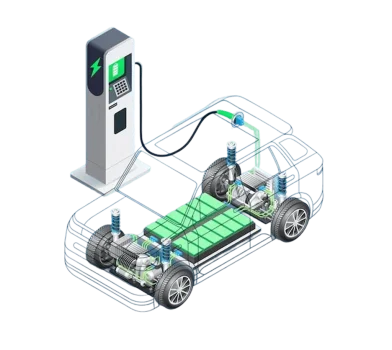
An electric car works very differently from a petrol or diesel car. It has no engine and no gearbox as you know them. Instead, it runs on a battery, a motor, a controller and a smart battery management system. If you understand these parts, you can work on the cars of tomorrow, not just the cars of yesterday. Millions of petrol and diesel cars are still on the road. Instead of scrapping them, owners can convert them to electric. This is called retrofitting, and skilled people are needed to plan and do it safely.

In this course, you will learn by doing. You will study motors, batteries, charging and high-voltage safety. Then you will design a complete ICE-to-EV conversion yourself. You do not need years of experience to start. You only need curiosity and the will to learn.

Learn the skill. Join the EV revolution. Build your career with TCoE.

Electric Car Technology & Retrofitting Course

Frequently Asked Questions

Q1. Can a petrol or diesel car be converted into an electric car in India?

Yes. This is called ICE-to-EV retrofitting. The engine is replaced with an electric motor, controller and battery pack. In India, a conversion must follow safety rules and approval requirements. Day 11 of this course covers these rules, so you know how to plan a conversion the right way.

The scope is growing fast. More electric cars on the road means more demand for trained technicians. After this course, you can work as an EV Car Technician, EV Retrofit Technician, Battery & BMS Technician, EV Diagnostic Technician or Service Center Executive. You can also start your own EV service or retrofit workshop. TCoE provides placement assistance to help you begin.

No. Students, diploma and ITI holders, mechanics, electricians, workshop owners and working professionals can all join. The course starts with the basics and high-voltage safety, so beginners can follow it easily.

The course is 72 hours, spread over 12 days with 6 hours each day. It is mostly practical. You will trace power-flow paths, read wiring diagrams, work on a battery and BMS trainer, size a battery pack and design a complete conversion with a bill of materials.

Yes. After you complete the course and pass the final assessment, you receive a TCoE certificate. The course is offline at our Jaipur training center, in English and Hindi, so you get real hands-on practice.