
Become a Certified Solar PV Professional in 72 Hours
- Hindi, English
- 72 Hours
- All Courses Created by Top IITians
- ESSCI/NSDC Recognized Training Center
- Courses Available in Both Online & Offline Modes
- Over 3,526+ Students Enrolled
Get Free Class Now
Fill the Form to Unlock Free Lectures.
About Solar Energy Course
The Solar Energy Course is an industry-focused training program designed to prepare individuals for a successful career in the rapidly growing renewable energy sector. It combines essential theoretical knowledge with practical, hands-on training, enabling learners to work confidently on real-world solar projects.
As the world shifts toward clean and sustainable energy, solar power has become one of the most in-demand career paths. This course equips students with the skills needed to design, install, operate, and maintain solar power systems for residential, commercial, and industrial applications.
Suitable for beginners with no technical background as well as working professionals seeking to enhance their skills, the course guides learners from fundamental concepts to advanced solar system applications, ensuring job-ready expertise in the solar energy industry.
What you'll learn
After this course you will learn:
- Fundamentals of Solar Energy: Understand the basics of solar radiation, photovoltaic effect, and how sunlight is converted into usable electricity.
- Overview of Solar PV Components: Learn about key system components such as PV modules, inverters, batteries, charge controllers, mounting structures, and cabling.
- Types of Solar PV Systems: Get familiar with on-grid, off-grid, and hybrid systems, and their real-world applications.
- Basic System Design Principles: Gain introductory skills in calculating energy requirements, sizing PV modules, selecting inverters, and planning simple PV layouts.
- Installation Techniques & Safety: Understand basic installation procedures, tools required, wiring practices, and essential safety protocols to prevent electrical and structural hazards.
- Site Assessment & Survey Basics: Learn how to evaluate rooftops or open areas for solar installation, including shading analysis and orientation considerations.
- Operation & Maintenance Essentials: Acquire basic knowledge of routine maintenance, system inspection, cleaning procedures, and identifying common system issues.
- Introduction to Solar PV Standards & Policies: Get an overview of relevant standards, certification requirements, and government policies supporting solar deployment.
Course Detail
Why take this course?
This course provides a comprehensive understanding of solar photovoltaic systems, from design and installation to operation and performance optimization. You will learn about PV technologies, system sizing, electrical integration, safety standards, and maintenance practices. With the rapid growth of solar energy projects across residential, commercial, and utility-scale sectors, skilled solar PV engineers are in strong demand. This course equips you with industry-relevant, job-ready skills and prepares you for a rewarding career in the renewable energy sector, supporting the transition to clean and sustainable power.
How to use online TCoE platform?
Tools and Equipment required
National Skill Development Mission
Module 1: Solar PV system and basics of electricity
- Types of Solar PV systems
- Residential rooftops.
- Commercial/Industrial solar.
- Agricultural pumping.
- Ground Mounted/Utility Scale
- Types of Solar PV Systems
- Off-Grid Systems (standalone, battery-based).
- On-Grid Systems (grid-tied, no batteries).
- Hybrid Systems (grid + battery backup).
- Types of Solar PV systems
C. Basics of Electricity
- Voltage, Current, Resistance and Ohm’s Law
- Energy and Power
Module 2: Solar PV System Components
A. PV Modules
a. What is Solar PV Module?
b. Types: Types of Solar PV modules.
c. Specifications of a Commercial Solar PV Module, Voltage (Voc, Vmp), Current (Isc, Imp), Power (Wp).
d. Series & Parallel Connections – effect on voltage/current.
B. Solar PV Mounting Structures and Materials
a. Difference types of Solar PV mounting structure
b. Structural Elements: Footings, Legs, Rafters, Purlins, and Braces
c. Materials: HDGS (Hot-dip galvanized steel), GI, Aluminium.
d. Anti-corrosion: Zinc Spray & anti-rust coating.
C. Civil Materials for Solar PV Foundations
a. Foundation materials: Cement, Sand, Gravel.
b. Epoxy and waterproofing chemicals.
D. Balance of System (BOS) Components
a. Connectors & Cabling
Ø MC4 connectors.
Ø DC solar-grade cables (UV resistant, double insulation).
Ø AC cables (for grid connection).
Ø Cable ties, lugs, HDPE piping.
b. Protection Devices – DC Side
Ø DCDB: fuses, surge protection devices.
Ø DC isolators.
c. Inverter: String Inverter, Central Inverter, Microinverter
d. Protection Devices – AC Side
Ø ACDB: MCB/MCCB, SPD, isolators, load side protection.
e. Earthing & Safety
Ø Earthing pits & electrodes (copper/GI).
Ø Minimum three earthing points: PV array, inverter, LA.
Ø Lightning Arrestor (LA).
f. Mounting Accessories
Ø Nuts, bolts, fasteners (SS/GI, anti-rust).
Ø Structural clamps.
g. Enclosures & Conduits
Ø Junction boxes.
Ø HDPE conduits for routing & protection.
Ø Waterproofing and weather-proof enclosures.
Module 3: Installation Practices
A. Site Preparation & Layout
- Site survey & shading analysis – using compass, mobile apps, and observation of obstructions.
- Marking module rows/array layout – spacing, alignment, cable trench routes.
- Orientation & tilt angle selection – based on latitude & true south.
- Foundation marking – methods for rooftop.
B. Mounting Structure Installation
- Mechanical assembly – cutting, drilling, grinding.
- Rooftop anchoring – civil and structural considerations.
- Fixing module mounting rails – end & mid rails, clamps.
- Alignment & torque tightening – use of spirit level and torque wrench.
C. Solar Module Installation
- Safe lifting and handling of PV modules – pair lifting, no pressure on glass.
- Mounting on structure – sequence of fixing with end clamps and mid clamps.
- Correct tightening torque – avoiding micro-cracks.
D. DC Side Installation
- Cable selection – size, insulation, solar grade, color coding.
- MC4 crimping & termination – step-by-step procedure.
- String formation & DCDB connection – routing and combining.
- Fuse, SPD, isolator – role in safety.
E. AC Side Installation
- Inverter mounting & wiring – ventilation, cable routing.
- ACDB installation – MCB, MCCB, SPD, ELCB.
- Cable routing to grid/load – conduits, glands, lugs.
- Earthing & lightning protection – LA, busbar connections.
F. Earthing & Safety Practices
- Types of earthing – equipment, lightning, neutral.
- Earthing pit preparation – GI pipe, charcoal, salt, bentonite.
- PPE use – helmet, gloves, shoes, harness, extinguishers.
G. Installation of Grid Tied Solar Power System
H. System Testing & Commissioning
- Continuity & polarity check – DC/AC sides.
- Voc & Isc testing – string-wise verification.
- Inverter startup – sequence & self-checks.
- Grid synchronization – anti-islanding & protection.
Log sheet recording – maintaining records for QC.
Module 4: Safety & Standards
A. Electrical & Fire Safety Practices
- Risks in solar PV systems: DC arc, short circuit, cable overheating.
- Safe handling of live wires, isolators, and breakers.
- Fire safety: electrical fires (Class C), battery room fires, inverter room safety.
- Importance of first response before professional help.
B. PPE (Personal Protective Equipment)
- Helmet, gloves (insulated), safety shoes, harness, reflective jacket, goggles, ear protection.
- Correct use and maintenance of PPE.
- Daily checklist before site entry.
Module 5: Testing, Troubleshooting & Maintenance
A. Testing Tools in Solar PV Systems
- Digital Multimeter: Voltage, current, resistance checks (DC/AC).
- Clamp Meter: Non-contact current measurement on load and inverter output.
B. Common Faults in Solar PV Systems
- Loose Connections: Causes sparking, overheating, and power loss.
- Inverter Error Codes: Grid failure, over-voltage, under-voltage, isolation fault.
- Module Degradation: Yellowing, cracks, delamination, PID (Potential Induced Degradation).
C. Preventive & Corrective Maintenance
- Preventive Maintenance:
- Regular cleaning of panels.
- Visual inspection of cables & junction boxes.
- Tightening of bolts and clamps.
- Routine earthing resistance test.
- Corrective Maintenance:
- Replacing faulty fuses, SPD, or isolators.
- Repairing or replacing defective inverter.
- Re-crimping faulty cable terminations.
D. Panel Cleaning Methods
- Wet Cleaning: Water + soft brush/sponge → removes dust and dirt.
- Dry Cleaning: Using microfiber cloth or robotic cleaners in water-scarce regions.
Activities
- Scrubbing: For bird droppings or stubborn stains → use only soft brushes (no hard metal/rough pads).
- Precautions:
- Avoid cleaning during peak sunlight (thermal shock risk).
- Use RO/soft water to prevent mineral deposits.
- Always turn off DC isolator before cleaning.
Module 6: Policies, Incentives & Documentation
A. Net Metering Process, Open Access & Tri-partite Agreements
- Net Metering:
- Concept: Export excess solar power to grid, import when needed.
- Process: Application → DISCOM approval → Net meter installation → Billing.
- Open Access:
- For large consumers (>1 MW).
- Allows buying solar power directly from producers through grid.
- Tri-Partite Agreements:
- Signed between DISCOM + Consumer + Developer.
- Ensures billing, responsibilities, and compliance.
B. Subsidies & Schemes (Central & State Governments)
- MNRE Subsidies:
- 20–40% subsidy for residential rooftop solar (up to 10 kW).
- State Policies:
- Different states offer additional subsidies, exemption in wheeling charges, or incentives.
- PM Surya Ghar Muft Bijli Yojana (2024):
- Free solar up to 300 units/month for households.
- Impact of subsidies on project economics.
C. Installation Documentation
- Site survey form (load details, shading, space availability).
- Single Line Diagram (SLD).
- Net metering application.
- Commissioning report & performance certificate.
D. Role of Solar Technician in Entrepreneurship/Job Market
- Employment opportunities: EPC companies, O&M firms, DISCOMs, MSMEs.
- Entrepreneurship scope: Rooftop solar installer, O&M contractor, solar product dealer.
- Importance of certifications (ESSCI, MNRE, NISE).
Job Opportunities
Here are some interesting job opportunities after completing the Solar PV Rooftop course:
Solar PV Installer – Install and assemble solar panels, wiring, and inverters on residential or commercial sites.
Solar Maintenance Technician – Perform routine maintenance, system inspections, and repairs to ensure peak solar performance.
Site Engineer (Solar Projects) – Oversee installation projects, manage teams, and ensure safety and quality standards are met.
Solar System Designer – Design customized PV systems based on site analysis, energy requirements, and client needs.
Solar Project Assistant / Coordinator – Support project planning, logistics, and execution in solar energy companies.
Energy Auditor / Consultant – Assess energy consumption and recommend solar-based solutions for cost and energy efficiency.
Entrepreneur / Solar Service Provider – Start your own business offering solar installation and maintenance services.
- Renewable Energy Technician – Work with green energy firms focusing on sustainable and smart energy systems.
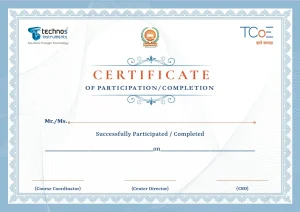
TCoE Trainings certificate
Trusted by 100+ companies Annually, TCoE Certifications are recognized across industries.
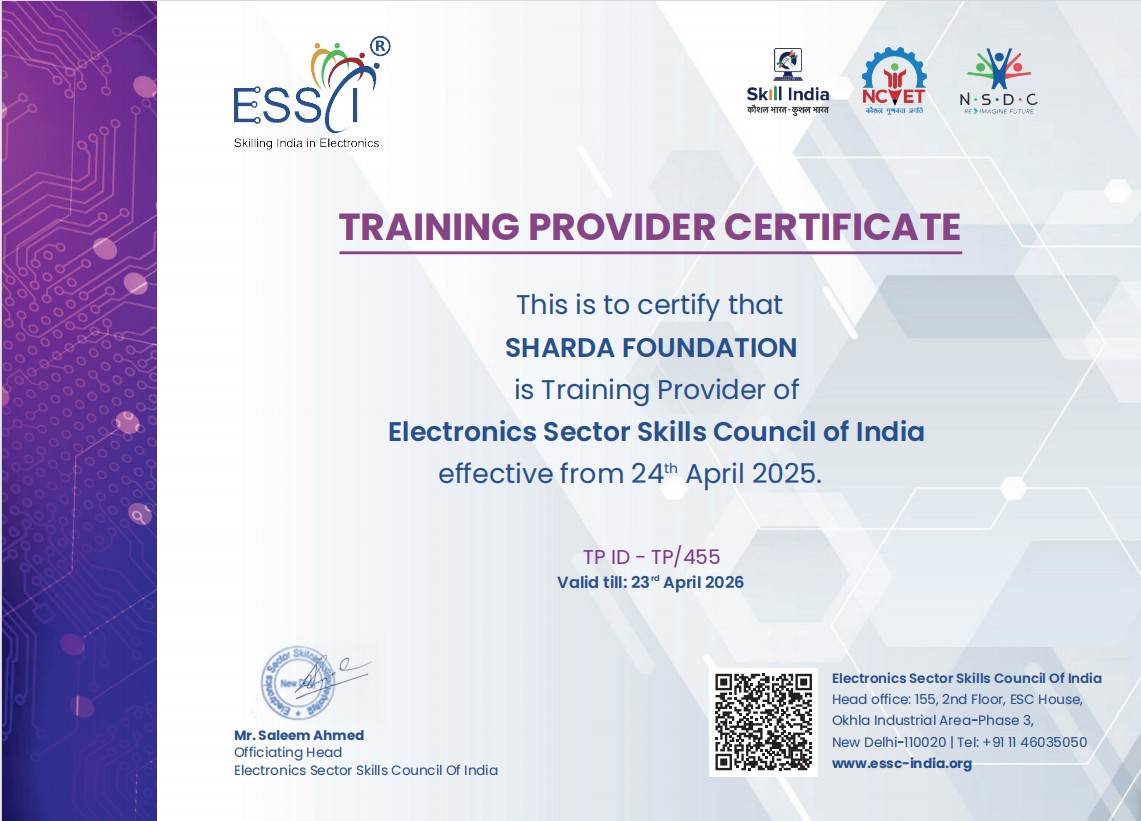
ESSCI Certified Courses
All programs are ESSCI-certified, validating their quality, credibility, and alignment with industry needs.
How will your training work?
Our solar training program combines expert-led instruction with practical, hands-on learning to help you master real-world solar energy skills
Learn & Practice
Learn core concepts through expert-led videos and gain hands-on experience with real projects.
Assess Your Skills
Test your knowledge with quizzes, module tests, and a final assessment.
Get Expert Support
Resolve your doubts with 1:1 expert support and Q&A within 24 hours.
Earn Certification
Get certified upon successful completion of the training.
Build a Future-Ready Career
in Solar Energy
Real Training. Real People. Real Results.
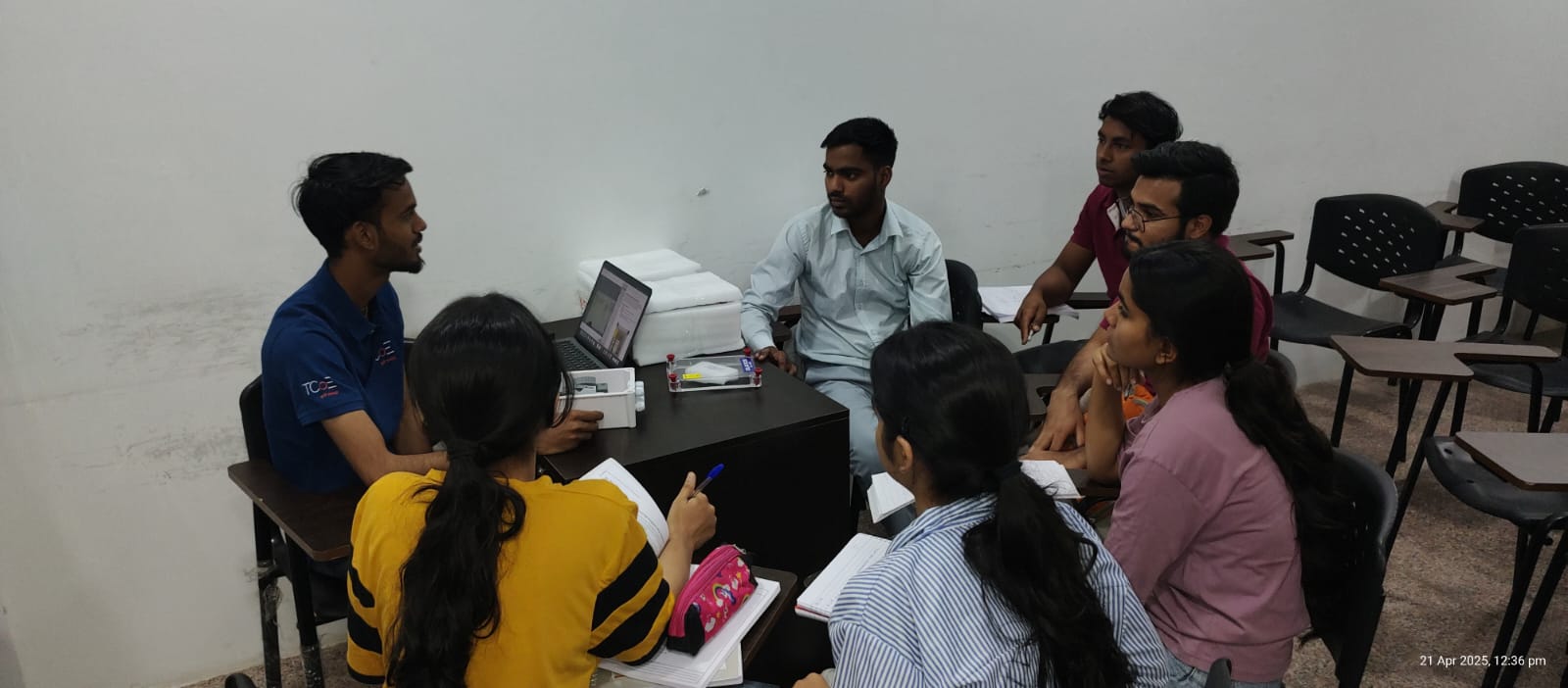
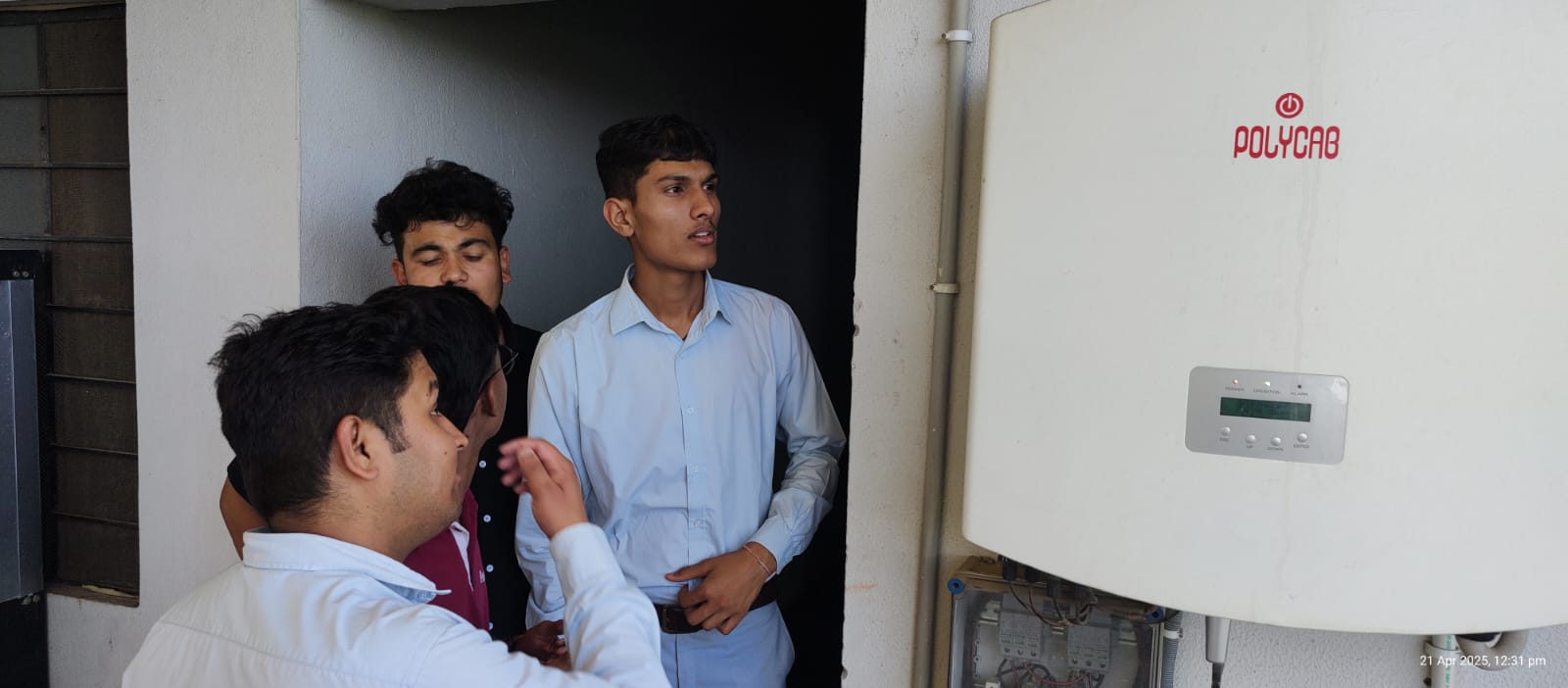
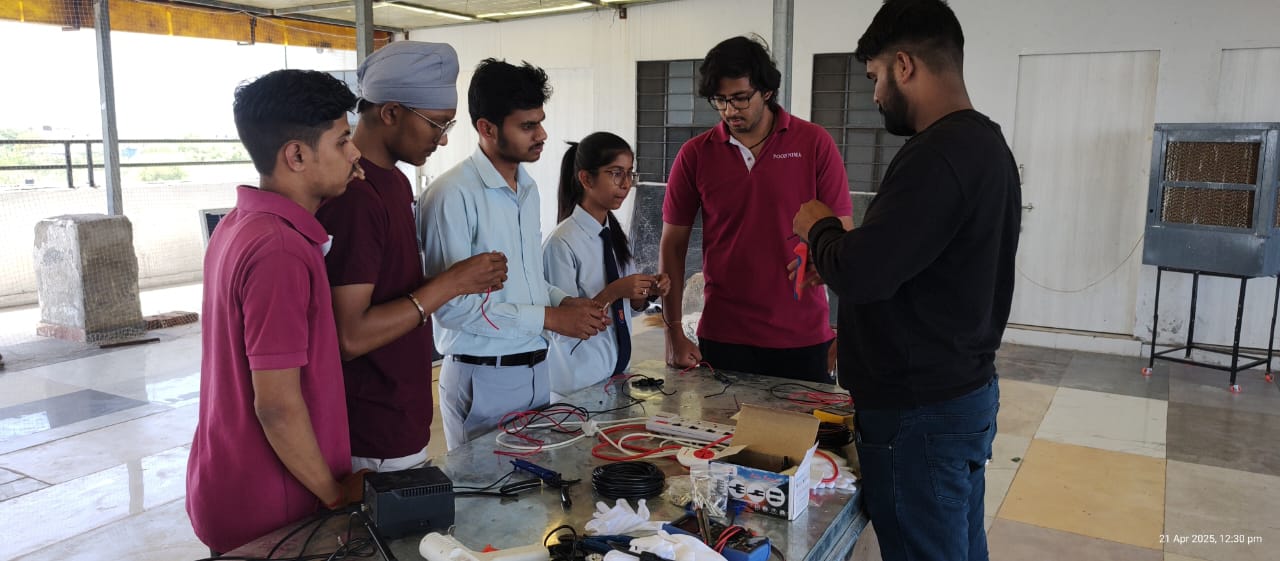
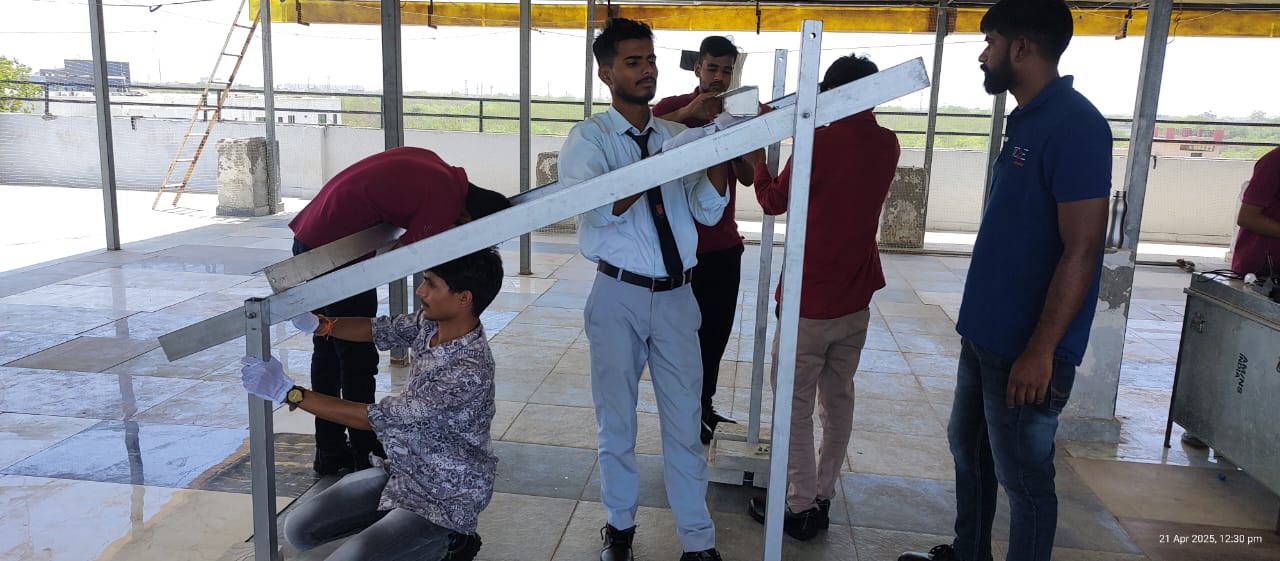
Stepping into this solar course opened the door to real-world solar technology and innovation. From live classroom sessions to hands-on workshops and on-site training, every experience was practical and impactful. Designing, installing, and testing complete solar power systems gave the confidence to work on real residential and commercial solar projects.
See what our students
have to say
With over 3+ years of experience, our mission is to deliver confident smiles through
personalized treatments in a comfortable.
Pooja S.
Solar Course
I joined this course to switch to a renewable energy career, and it was the best decision! The mix of theory and fieldwork helped me become a certified solar PV technician in just a few months.
Arvind Kumar
Solar Course
This course gave me a complete understanding of how solar systems work. From mounting panels to connecting inverters, every session was practical and hands-on. I now confidently handle real installation projects!
Ravikant
Solar Course
Learning how to design and install solar systems was empowering. I can now contribute to sustainable energy projects and help communities move toward clean power solutions.
Karnika B.
Solar Course
TechnoS Centre of Excellence offers industry-focused training in Drone Technology, Solar Photovoltaic Systems, EV Technology, Battery Assembly, Raman Spectroscopy, and Embedded Systems, certified by ESSCI under the National Skill Development Council (NSDC). We prepare students for real-world careers with hands-on learning and expert guidance.
Jaipur Training Centre Address
G1-43, RIICO Industrial Area, Sitapura, Jaipur, Pin- 302022
Kota Training Centre Address
Jai Minesh Adhivasi University, Opp. IIIT, Kota Ranpur, Rajasthan, Pin - 325003
Contact Details
Call: +91-6375256481 | 92570 53326
Email: info@technoscoe.com
© 2026 All Rights Reserved.