

Embedded IoT Specialist Course
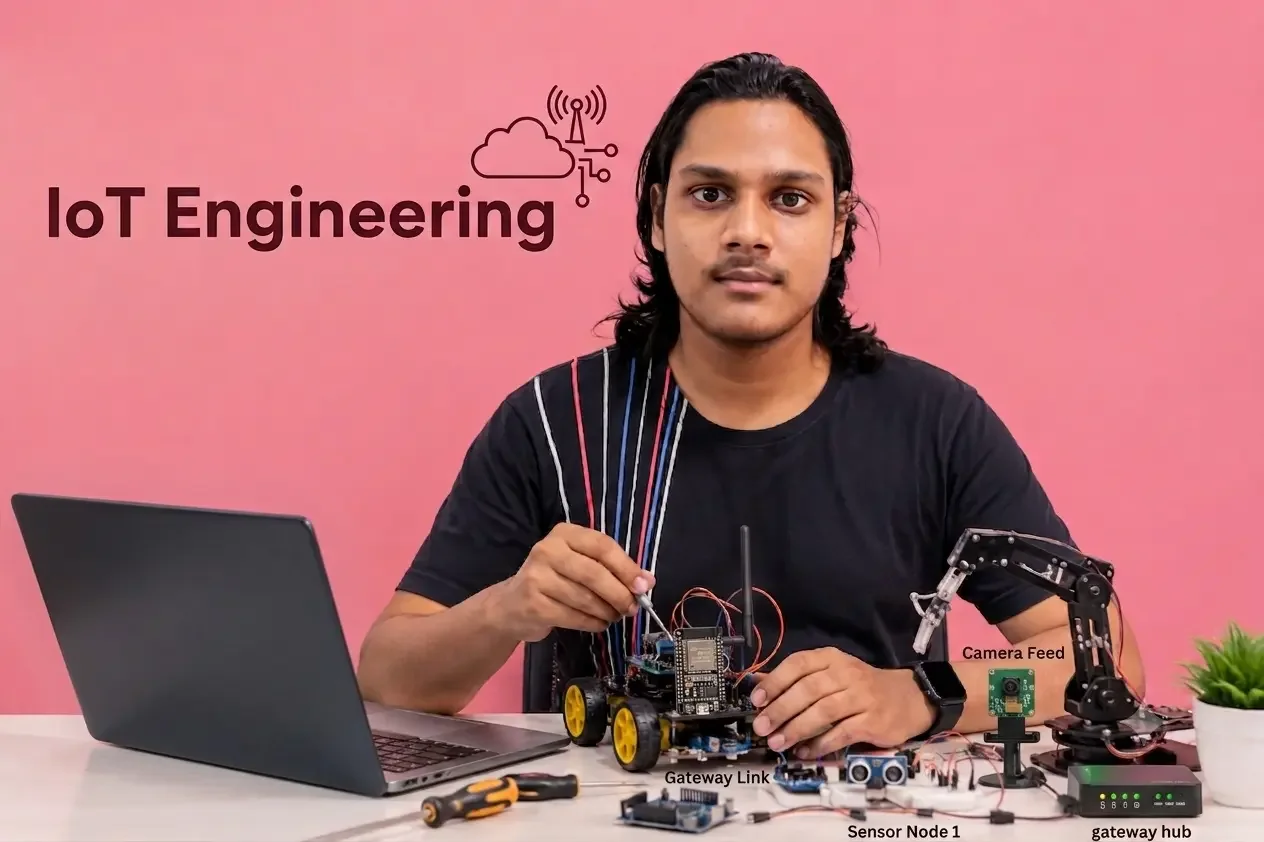
Build the tech powering smart devices from microcontrollers to cloud-connected sensors with Hands-on Embedded IoT training that turns beginners into Industry 4.0-ready engineers.
About Course
The Embedded IoT Specialist Course is a 144-hour advanced training program.
It is designed as an extension for learners who have already completed the 152-hour IoT Engineer Master Course, bringing the total program duration to 182 hours and enabling students to advance from general IoT development to professional-level embedded engineering.
Through a blend of theory and hands-on practice, learners develop deeper skills in Embedded C programming, register-level control of GPIO, timers and ADCs, low-power optimization, RTOS fundamentals, PCB design using EasyEDA, and hardware debugging tools such as multimeters and logic analyzers. The training also covers sensor calibration, interface testing, and structured hardware validation workflows used in industry.
What you'll learn
- Embedded Systems Basics – Learn microcontrollers, memory, and real-time computing.
- Microcontroller Programming – Write firmware in C/C++ for ARM, STM32, AVR, and ESP32.
- Hardware Interfacing – Connect and control GPIO, ADC/DAC, UART, SPI, and I²C.
- Sensors & Actuators – Build smart systems with real-world sensor integration.
- RTOS – Develop responsive multitasking embedded applications.
- IoT Connectivity – Connect devices using Wi-Fi, BLE, LoRa, Zigbee, and MQTT
- Edge Computing – Optimize devices for faster, low-power performance.
- PCB Design & Prototyping – Design and prototype embedded hardware from scratch.
Course Content
Why take this course?
This course is designed to build expertise at the intersection of embedded systems and Internet of Things technologies. You will learn to develop intelligent edge devices by integrating microcontrollers, sensors, communication protocols, and cloud platforms with efficient embedded software. The course emphasizes hands-on development of secure, low-power, and scalable IoT solutions used in smart manufacturing, healthcare, automotive, agriculture, and smart infrastructure. As industries increasingly adopt connected and autonomous systems, this course prepares you for specialized, high-demand roles in embedded IoT design, deployment, and innovation.
Module 1: Embedded IoT Foundations
- Embedded IoT: Definition and concept of embedded IoT, embedded devices and connected smart systems, elements of embedded IoT systems, role of sensors, actuators, controller, communication interface and power unit, applications of embedded IoT in smart home, healthcare, agriculture, industrial monitoring and smart city systems.
- Embedded System vs IoT System: Concept of embedded system and IoT system, comparison between standalone embedded systems and internet-connected systems, local control and remote monitoring, data logging and cloud interaction, transformation of an embedded system into an IoT-enabled system.
- Real-Time Connected Devices: Concept of real-time connected devices, need of timely sensing and response, soft and hard real-time applications in IoT, latency, response time and update rate, examples of connected real-time systems in healthcare, industrial automation, surveillance and safety applications.
- Device–Gateway–Cloud Model: Architecture of IoT systems, device layer, gateway layer and cloud layer, data acquisition, local processing, protocol conversion, data aggregation, storage, analytics and dashboarding, telemetry and command flow, direct-to-cloud and gateway-based IoT architectures.
- Product Lifecycle: Stages of embedded IoT product development, idea generation, requirement analysis, system design, hardware and software development, prototyping, testing, deployment, maintenance, firmware updates and end-of-life considerations.
- Design Constraints: Cost constraints, power constraints, memory constraints and reliability constraints in embedded IoT systems, trade-off between performance and cost, battery-powered and mains-powered operation, low-power design awareness, memory limitations, environmental effects, fault tolerance and reliability requirements.
Module 2: Electronics Essentials for IoT Devices (Basics of Electronics)
Module 4: Microcontrollers, Development Environment and Embedded Interfaces
Module 5: IoT Communication, Networking and Cloud Integration
Module 6: Data Logging, Analytics, Security and Deployment for Embedded IoT Systems
Module 7: Sensor and Actuator Integration for Embedded IoT Systems
Module 8: Motor Control and Motion Interface for IoT Applications
Module 9: Real-Time Operating Systems for Embedded IoT
Module 10: Advanced IoT Connectivity and Wireless Systems
Module 11: IoT Cloud Platforms, Dashboards and Data Services
Module 12: Storage, Logging and Data Management in IoT Systems
Module 13: Reliability, Protection and Power Management in Embedded IoT
Module 14: Testing, Validation and Debugging of Embedded IoT Products
Module 15: Secure Embedded IoT Systems
Module 16: Product Design, Deployment and Documentation
Module 17: Industry Applications and Case Studies of Embedded IoT
Module 18: Professional Practice, Portfolio and Career Readiness
₹2,372
₹3,416
Discount 31% off
Benefits Obtained :
- 12 weeks
- 12 House / Week
- Basic & Intermediate
- Hindi, English
- Learn & Get Certified
Related Course
Success Stories from Our Learners
Join TCoE and gain practical knowledge, industry-recognized expertise, and the confidence to achieve your career goals.
Why Learn Drones?
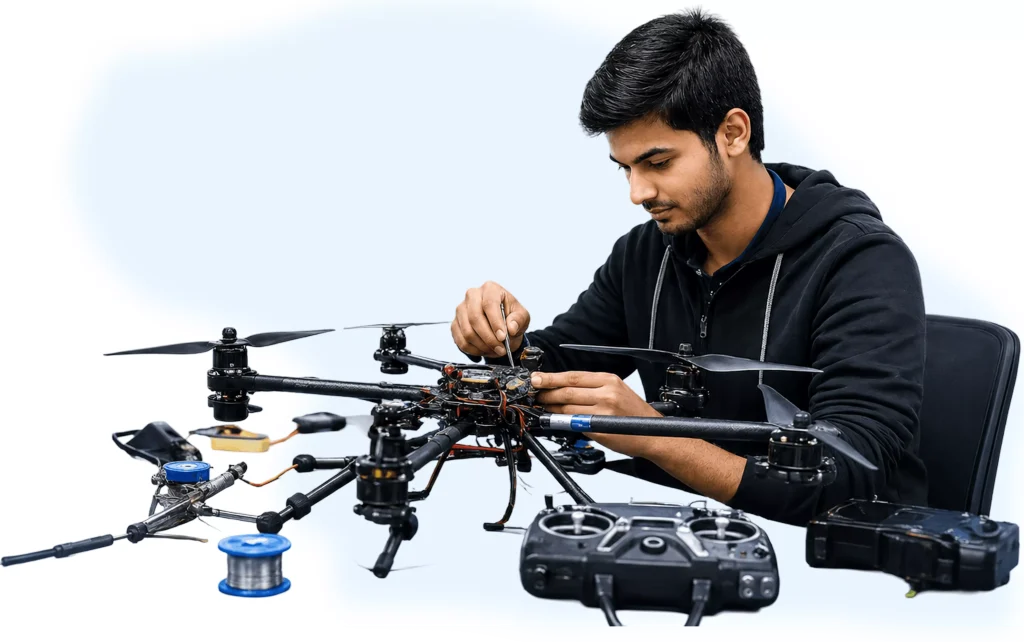
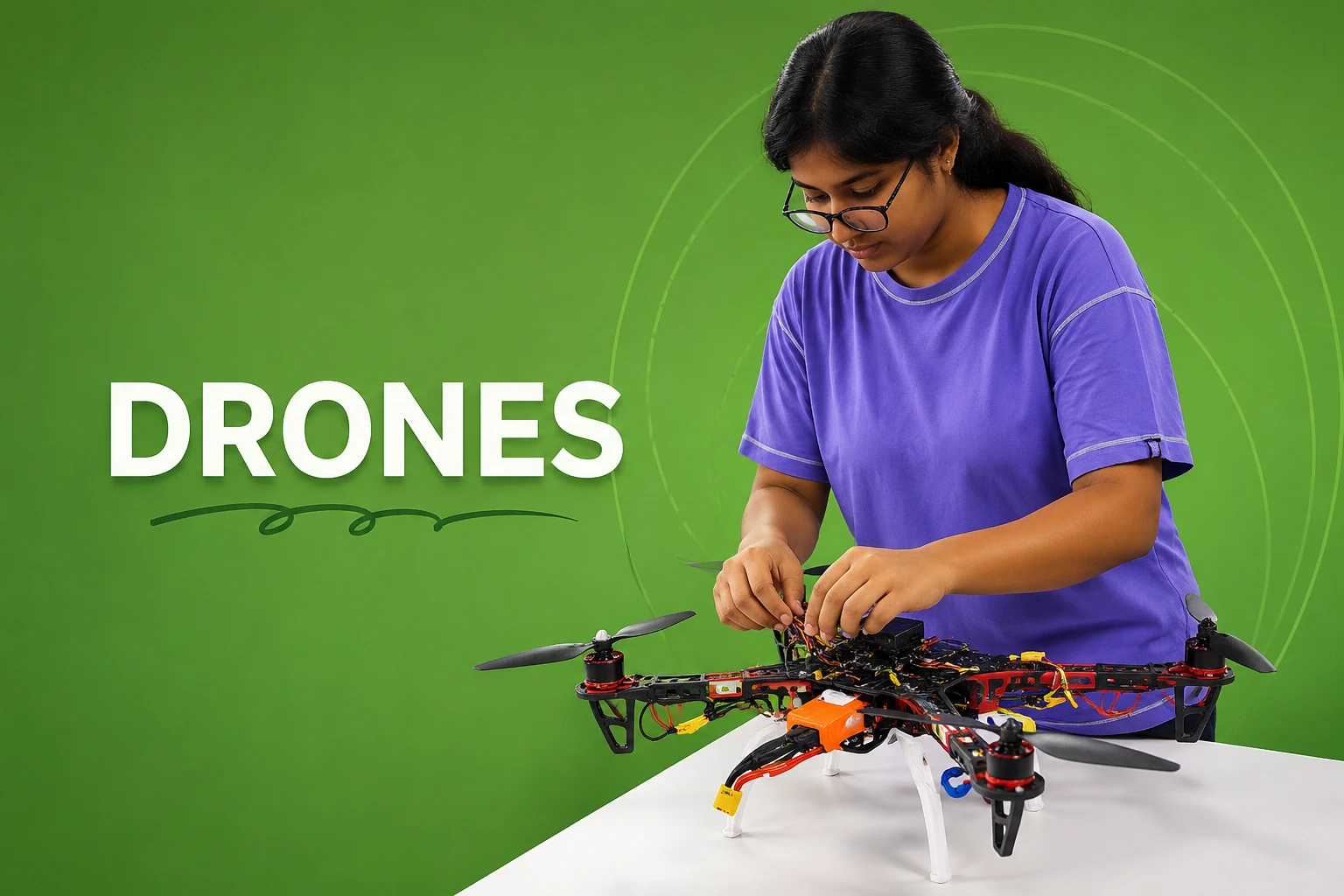
Drone technology is transforming industries like agriculture, construction, surveying, filmmaking, logistics, and infrastructure inspection, creating strong demand for skilled professionals.
By learning drone technology, you’ll gain practical skills in drone operation, aerial mapping, flight planning, and safety regulations preparing you for rewarding careers, freelance opportunities, and the future of smart aerial innovation.
Drone technology is transforming industries like agriculture, construction, surveying, filmmaking, logistics, and infrastructure inspection, creating strong demand for skilled professionals.
Drone technology is transforming industries like agriculture, construction, surveying, filmmaking, logistics, and infrastructure inspection, creating strong demand for skilled professionals
Frequently Asked Questions
Q1. Who is eligible to join this drone course?
Students, graduates, working professionals, entrepreneurs, and drone enthusiasts can enroll, subject to the eligibility requirements of the selected course.
Q2. Do I need prior drone experience?
No. Most beginner and intermediate courses do not require previous drone experience.
Q3. What is the minimum educational qualification?
Eligibility varies by course. Please refer to the individual course page for the specific academic requirements.
Q4. Can engineering and diploma students join?
Yes. Engineering, diploma, and ITI students can enroll to build practical drone technology skills.
Q5. Can working professionals attend the course?
Absolutely. Flexible learning options allow working professionals to upgrade their skills without interrupting their careers.
Q1. Is this course practical or theory-based?
Our drone courses combine theoretical concepts with extensive hands-on practical training to help learners develop real-world skills.
Q2. Will I work with actual drones during the course?
Yes. Depending on the course, you’ll gain practical experience in drone assembly, servicing, maintenance, simulation, and flight operations.
Q3. Are the courses suitable for beginners?
Yes. Most courses start with the fundamentals and gradually progress to advanced concepts, making them suitable for beginners and professionals alike.
Q4. What skills will I gain after completing the training?
You’ll learn drone technology, safety procedures, troubleshooting, maintenance, flight operations, and industry best practices relevant to your chosen course.
Q5. Is hands-on training included in online courses?
Online courses focus on theoretical knowledge, while practical sessions may vary depending on the specific course and training format.
Q1. Will I receive a certificate after completing the course?
Yes. Eligible learners receive a course completion certificate after successfully meeting the course requirements.
Q2. Is the certificate recognized by the industry?
Certification depends on the specific course. Several TechnosCOE drone programs include industry-recognized certifications such as ESSCI where applicable.
Q3. Do I need to pass an assessment to earn the certificate?
Yes. Online learners can complete eligible courses at their own pace within the provided access period.
Q4. Can I use the certificate while applying for jobs?
Most courses are available in English and Hindi.
Q1. Is the course available online and offline?
Yes. Most drone courses are offered in both online and offline modes, depending on the program.
Q2. How long does the course take to complete?
Course duration varies by program, ranging from a few weeks to several months.
Q3. Can I learn at my own pace?
Yes. Online learners can complete eligible courses at their own pace within the provided access period.
Q4. What languages are the courses available in?
Most courses are available in English and Hindi.
Q5. Are weekend or flexible schedules available?
Training schedules vary by batch and course mode. Please contact our team for the latest batch timings.